
Anobliss Cream Composition: Lidocaine, Nifedipine, and How It Works

Updated: Aug 21
Written by Elizabeth Chernoby in TheSkyMeds Editorial Standards
Medically reviewed by Jonathan Reed, Medical Content Reviewer Jul 22 2026
Introduction
A tiny tear in the lining of the anal canal can cause intense pain that feels far bigger than the injury itself.
This condition, known as an anal fissure, often leads to sharp pain during bowel movements and lingering discomfort afterward. Fortunately, topical medications like Anobliss Cream are designed to target both the pain and the underlying muscle spasm that slows healing.
Unlike simple numbing creams, Anobliss combines two proven medications that work together to improve comfort and support recovery. Understanding how these ingredients function can help patients use the treatment correctly and know what to expect.
Key Takeaways
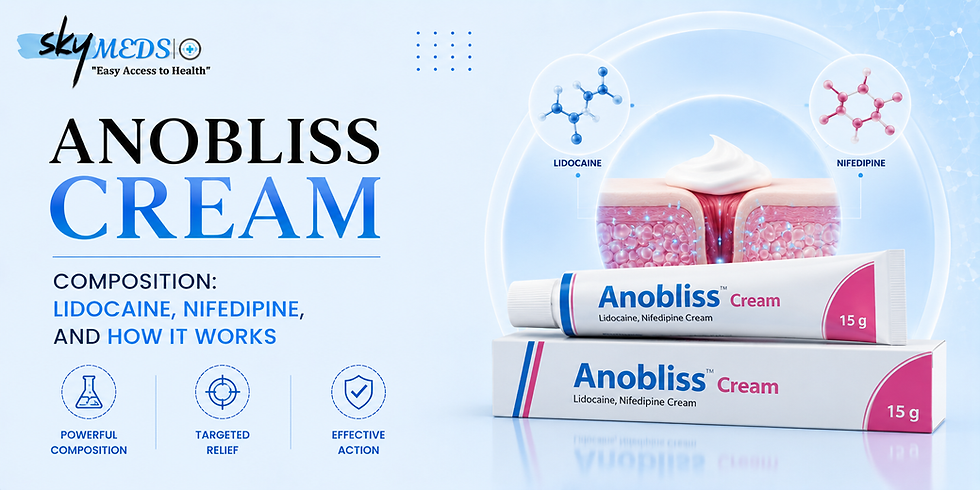
Anobliss Cream contains Lidocaine and Nifedipine .
Lidocaine quickly relieves pain by numbing the affected area.
Nifedipine relaxes the anal sphincter muscle and improves blood flow.
The combination promotes healing of anal fissures while reducing discomfort.
Proper application and healthy bowel habits improve treatment success.
Medical supervision is important, especially if symptoms persist.
What Is Anobliss Cream?
Anobliss Cream is a prescription topical medication commonly used to treat anal fissures. Its dual-action formula is designed to reduce pain while encouraging natural healing.
Rather than masking symptoms alone, the cream addresses one of the main causes of delayed healing: excessive tightening of the internal anal sphincter.
Doctors often recommend it alongside lifestyle changes such as:
Eating a high-fiber diet
Drinking adequate water
Avoiding constipation
Taking warm sitz baths
Maintaining good hygiene
Anobliss Cream Composition
The effectiveness of Anobliss Cream comes from two active pharmaceutical ingredients working together.
Ingredient | Purpose | How It Helps |
Lidocaine | Local anesthetic | Quickly relieves pain and burning |
Nifedipine | Calcium channel blocker | Relaxes anal muscles and improves blood circulation for healing |
Together, these ingredients target both symptoms and the underlying cause of chronic fissures.
How Lidocaine Works
Immediate Pain Relief
Lidocaine is a well-known local anesthetic.
It temporarily blocks nerve signals responsible for transmitting pain.
After application, patients often experience:
Reduced burning
Less itching
Decreased pain during bowel movements
Improved comfort while sitting
Pain relief generally begins within minutes, making bowel movements less stressful.
Why Pain Relief Matters
Pain causes many patients to avoid bowel movements, leading to constipation and harder stools.
By reducing pain, Lidocaine helps break this cycle, making it easier to maintain regular bowel habits that support healing.
How Nifedipine Works
Relaxing the Anal Sphincter
Nifedipine belongs to a group of medicines called calcium channel blockers.
When applied locally, it helps relax the internal anal sphincter muscle.
This relaxation reduces excessive pressure that contributes to fissure formation and prevents healing.
Improving Blood Supply
Healing tissues need oxygen and nutrients.
Relaxation of the sphincter improves local blood flow, allowing damaged tissue to repair itself more effectively.
Reducing Muscle Spasm
Persistent muscle spasm is one of the biggest reasons chronic fissures fail to heal.
Nifedipine interrupts this cycle by:
Lowering resting sphincter pressure
Decreasing muscle spasm
Improving circulation
Supporting tissue repair
Why Lidocaine and Nifedipine Work Better Together
Each ingredient targets a different aspect of the condition.
Lidocaine provides rapid symptom relief.
Nifedipine works more gradually by improving the healing environment.
The combined benefits include:
Faster pain relief
Better patient comfort
Improved treatment adherence
Increased likelihood of fissure healing
Reduced need for surgery in suitable cases
Successful anal fissure treatment depends on relieving pain while reducing sphincter pressure so the body can heal naturally.
Conditions Treated with Anobliss Cream
Doctors may prescribe Anobliss Cream for:
Acute anal fissures
Chronic anal fissures
Painful anal spasms
Post-surgical anorectal discomfort in selected cases
Severe pain associated with bowel movements
It is not suitable for every anorectal condition, so proper diagnosis is important.
How to Apply Anobliss Cream
Step-by-Step Instructions
Wash your hands thoroughly.
Clean and gently dry the affected area.
Apply only the prescribed amount.
Use a finger or applicator if advised.
Wash your hands after application.
Follow your doctor's recommended schedule.
Do not exceed the prescribed dose.
How Long Does It Take to Work?
Pain relief from Lidocaine may occur within minutes.
Healing from Nifedipine usually takes several weeks.
Many patients notice:
Less pain within days
Easier bowel movements
Reduced bleeding
Progressive healing over 4–8 weeks, depending on the severity of the fissure
Consistency is essential for the best results.
Possible Side Effects
Most people tolerate Anobliss Cream well.
Possible side effects include:
Mild irritation
Temporary burning
Redness
Itching
Local discomfort
Rare side effects may include:
Allergic reaction
Skin rash
Swelling
Dizziness (rare)
Seek medical advice if symptoms worsen or severe reactions occur.
Who Should Avoid Anobliss Cream?
The cream may not be suitable for individuals who:
Have allergies to Lidocaine or Nifedipine
Have certain heart conditions requiring special consideration
Are pregnant or breastfeeding without medical advice
Have unexplained rectal bleeding that has not been evaluated
Have severe infections around the anal area
Always discuss your medical history with your healthcare provider before starting treatment.
Tips to Improve Healing
Medication works best alongside healthy lifestyle habits.
Helpful measures include:
Eat more fruits and vegetables.
Increase dietary fiber.
Stay well hydrated.
Avoid prolonged straining.
Exercise regularly.
Use warm sitz baths.
Respond promptly to the urge to have a bowel movement.
These changes help reduce pressure on the healing tissue and lower the risk of recurrence.
When Should You See a Doctor?
Medical evaluation is recommended if:
Pain lasts longer than several weeks.
Bleeding becomes heavier.
Symptoms return repeatedly.
You develop fever or significant swelling.
Home treatment provides little or no improvement.
Persistent rectal symptoms should always be properly assessed because other conditions can cause similar complaints.
Conclusion
Anobliss Cream combines Lidocaine for fast pain relief with Nifedipine to relax the anal sphincter and improve blood flow. Together, these ingredients address both the symptoms and the underlying factors that slow the healing of anal fissures.
When used as prescribed and combined with healthy bowel habits, adequate hydration, and a fiber-rich diet, Anobliss Cream can be an effective part of a comprehensive treatment plan. If symptoms persist or worsen, consult a healthcare professional for further evaluation and guidance.
FAQ Section
1. What is Anobliss Cream used for?
It is primarily used to treat anal fissures by relieving pain and promoting healing.
2. How does Lidocaine in Anobliss Cream work?
Lidocaine blocks pain signals from nerves, providing temporary numbness and pain relief.
3. What does Nifedipine do in Anobliss Cream?
Nifedipine relaxes the anal sphincter muscle and improves blood circulation to support healing.
4. How long should I use Anobliss Cream?
Use it for the duration recommended by your healthcare provider, which is often several weeks depending on your condition.
5. Can Anobliss Cream cause side effects?
Yes. Mild irritation, burning, itching, or redness can occur, but serious side effects are uncommon.
6. Can I buy Anobliss Cream without a prescription?
Availability varies by country. In many regions, it is supplied only with a prescription, so check your local regulations and consult a healthcare professional.


Comments