
Best Asthma Inhaler for Different Needs: Rescue, Controller, and Combination Options

Updated: Aug 21
Written by Dr. Adam Makis in TheSkyMeds Editorial Standards
Medically reviewed by Jonathan Reed, Medical Content Reviewer Aug 11 2026
Introduction
Many people assume that every asthma inhaler does the same job. In reality, different inhalers serve different purposes, and using the wrong one or relying too heavily on one type—can make asthma harder to control. Understanding which inhaler is designed for quick symptom relief and which is meant for long-term prevention can significantly improve quality of life.
Whether you've recently been diagnosed with asthma or are reviewing your treatment options, this guide explains the major categories of inhalers, their benefits, and how healthcare providers decide which option may be most appropriate.
Key Takeaways
Controller inhalers help prevent symptoms by reducing airway inflammation.
Combination inhalers contain more than one medication for long-term asthma management.
Proper inhaler technique is just as important as the medication itself.
Your healthcare provider will recommend the most suitable inhaler based on asthma severity, age, and symptom frequency.
Regular asthma reviews help ensure your treatment remains effective.
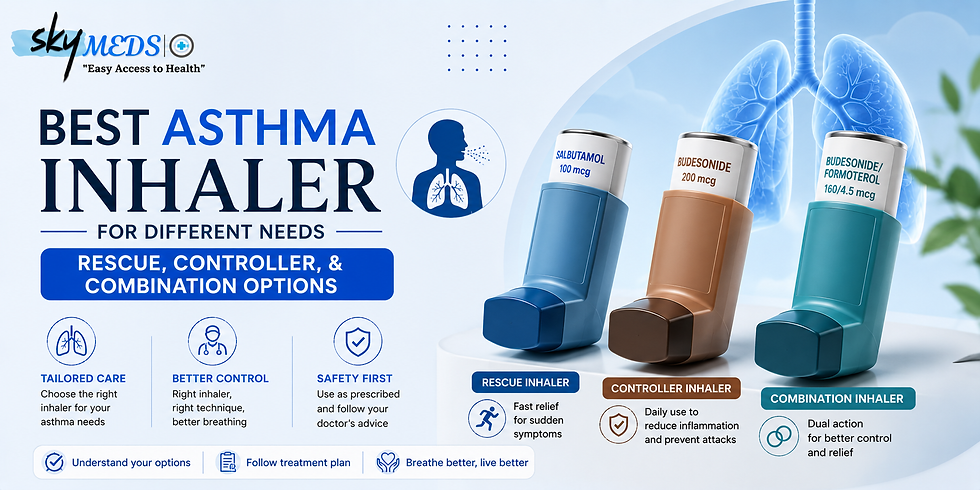
Understanding How Asthma Inhalers Work
Asthma causes inflammation and narrowing of the airways, making breathing difficult. Inhalers deliver medication directly into the lungs, allowing the medicine to act quickly while reducing exposure to the rest of the body.
Compared with oral medications, inhalers often provide faster symptom relief with fewer systemic side effects.
There are three major categories:
Rescue inhalers
Controller inhalers
Combination inhalers
Each plays a unique role in asthma management.
Quick Comparison of Asthma Inhaler Types
Inhaler Type | Purpose | When Used | Main Medication |
Rescue Inhaler | Immediate symptom relief | During asthma attacks or sudden symptoms | Short-acting bronchodilator |
Controller Inhaler | Prevent inflammation | Every day | Inhaled corticosteroid or similar medication |
Combination Inhaler | Long-term control and symptom prevention | Daily (or as prescribed) | Corticosteroid plus long-acting bronchodilator |
Rescue Inhalers for Fast Relief
What Is a Rescue Inhaler?
A rescue inhaler works quickly to relax the muscles around the airways, making breathing easier within minutes.
People typically use one when experiencing:
Wheezing
Chest tightness
Sudden coughing
Shortness of breath
Exercise-induced asthma symptoms
Because they act rapidly, rescue inhalers are essential for managing unexpected asthma symptoms.
When Should You Use One?
Healthcare providers generally recommend using a rescue inhaler:
During asthma attacks
Before exercise if exercise triggers symptoms
For sudden breathing difficulty
However, needing a rescue inhaler frequently may indicate that asthma is not well controlled.
Benefits
Fast symptom relief
Portable and convenient
Easy to carry during travel
Can prevent symptoms from worsening
Limitations
A rescue inhaler treats symptoms but does not reduce the underlying airway inflammation. If symptoms occur often, additional long-term treatment is usually necessary.
Controller Inhalers for Long-Term Asthma Control
What Are Controller Inhalers?
Controller inhalers are designed for daily use, even when symptoms are absent.
Their primary purpose is to reduce airway inflammation over time.
Unlike rescue inhalers, these medications work gradually and help prevent future asthma attacks.
Who May Benefit?
Controller inhalers are often prescribed for people who:
Experience asthma symptoms multiple times each week
Wake up at night due to asthma
Have frequent flare-ups
Need rescue medication often
Benefits
Reduces airway inflammation
Helps prevent asthma attacks
Improves lung function
Lowers emergency room visits
Supports long-term asthma control
Important Considerations
Controller inhalers work best when used consistently. Skipping doses can reduce their effectiveness and increase the likelihood of symptoms returning.
Combination Inhalers
What Makes Them Different?
Combination inhalers include two different medications:
An inhaled corticosteroid that reduces inflammation.
A long-acting bronchodilator that helps keep airways open for extended periods.
This dual approach helps many individuals maintain better asthma control.
When Are They Prescribed?
Healthcare providers may recommend combination inhalers for people whose asthma is not adequately controlled with a controller inhaler alone.
Advantages
Fewer asthma flare-ups
Better symptom control
Improved daily breathing
Greater convenience with one inhaler containing two medications
Choosing the Best Asthma Inhaler
There is no universal "best" inhaler because asthma varies from person to person.
Healthcare professionals consider several factors, including:
Age
Asthma severity
Symptom frequency
Lifestyle
Exercise habits
Previous asthma attacks
Other medical conditions
Ability to use the inhaler correctly
A personalized treatment plan generally provides the best results.
Common Types of Inhaler Devices
Metered-Dose Inhalers (MDIs)
These inhalers release a measured amount of medication with each press.
They often require good hand-breath coordination.
Dry Powder Inhalers (DPIs)
These devices deliver medication as a dry powder that is inhaled deeply.
They do not require pressing while inhaling.
Soft Mist Inhalers
Soft mist inhalers create a slow-moving spray, making medication easier to inhale for some individuals.
Healthcare providers help determine which device best matches a person's needs and inhalation ability.
Proper Inhaler Technique Matters
Even the most effective medication may not work well if the inhaler is used incorrectly.
Common mistakes include:
Inhaling too quickly
Not shaking the inhaler when required
Forgetting to exhale before inhaling
Missing daily doses
Failing to clean the inhaler regularly
Many asthma specialists recommend reviewing inhaler technique during routine appointments.
The right medication can only work if it reaches the lungs effectively. Correct inhaler technique is one of the simplest ways to improve asthma control.
Lifestyle Tips to Support Asthma Management
Medication is only one part of asthma care.
Healthy habits can also reduce symptoms.
Consider these strategies:
Identify and avoid known triggers.
Follow your asthma action plan.
Take medications exactly as prescribed.
Stay physically active when appropriate.
Avoid smoking and secondhand smoke.
Keep vaccinations up to date.
Attend regular asthma reviews.
Good lifestyle habits often complement medical treatment and improve overall respiratory health.
Questions to Ask Your Healthcare Provider
During your appointment, consider asking:
Which inhaler is best for my asthma severity?
Should I have both a rescue and controller inhaler?
How often should I use my medication?
Am I using my inhaler correctly?
What should I do during an asthma attack?
When should my treatment plan be reviewed?
These conversations help ensure your treatment matches your current health needs.
When to Seek Immediate Medical Care
Asthma can become life-threatening if symptoms rapidly worsen.
Seek emergency medical attention if:
Rescue medication provides little or no relief.
Breathing becomes extremely difficult.
Lips or fingernails appear blue.
Speaking becomes difficult because of breathlessness.
Symptoms worsen quickly despite treatment.
Prompt medical care can be lifesaving.
Conclusion
Finding the best asthma inhaler depends on your individual needs rather than a single medication or device. Rescue inhalers offer rapid relief during sudden symptoms, controller inhalers help prevent inflammation over time, and combination inhalers provide both anti-inflammatory and long-acting support for many people with persistent asthma.
The most effective asthma treatment combines the right medication, proper inhaler technique, regular follow-up, and a personalized management plan developed with your healthcare provider. By understanding the purpose of each inhaler type, you can play an active role in achieving better asthma control and improving your overall quality of life.

Frequently Asked Questions (FAQs)
1. Which inhaler works fastest during an asthma attack?
Rescue inhalers are designed to provide rapid relief by quickly relaxing the airway muscles.
2. Do I need to use a controller inhaler every day?
Yes. Controller inhalers are generally intended for regular daily use, even when you feel well, unless your healthcare provider advises otherwise.
3. Can I use only a rescue inhaler?
Some people with very mild asthma may only require a rescue inhaler, but frequent use often signals the need for additional long-term treatment. Always follow your healthcare provider's advice.
4. What is the difference between controller and combination inhalers?
Controller inhalers usually contain a medication that reduces inflammation, while combination inhalers contain both an anti-inflammatory medicine and a long-acting bronchodilator.
5. How can I tell if my asthma is well controlled?
Well-controlled asthma usually means infrequent symptoms, minimal nighttime awakenings, little need for rescue medication, and the ability to perform normal daily activities.
6. Why is inhaler technique so important?
Correct technique helps ensure the medication reaches your lungs effectively, improving symptom control and reducing the risk of asthma flare-ups.


Comments