
Dytor 10: Torsemide Uses, Dosage, and Side Effects

Written by Dr. Zack Ferris in TheSkyMeds Editorial Standards
Medically reviewed by Jonathan Reed, Medical Content Reviewer Sept 14 2026
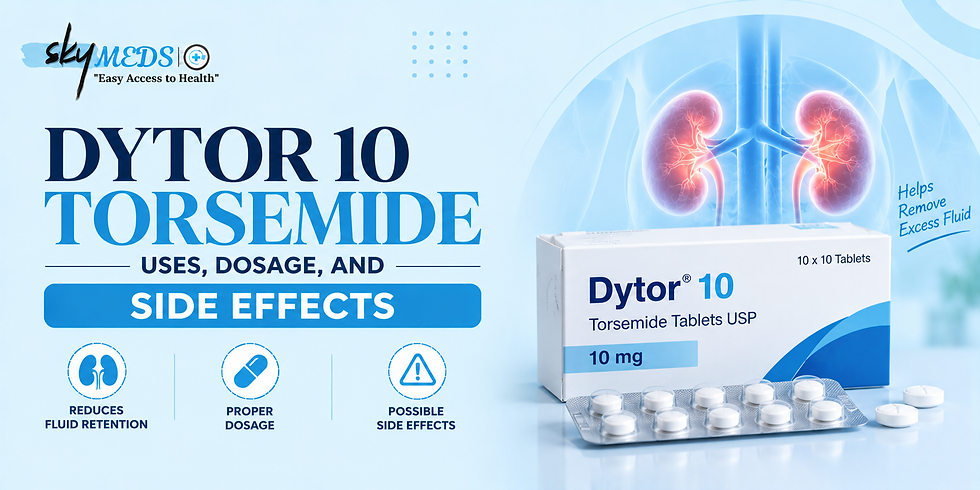
Dytor 10 is a prescription diuretic containing torsemide 10 mg, a medicine that helps the kidneys remove excess salt and water through urine. In India, Dytor 10 is marketed by Cipla and is used mainly for oedema, or fluid-related swelling, associated with conditions such as heart failure, kidney disease and liver disease; torsemide is also used to treat high blood pressure. Understanding Dytor 10 uses, dosage, and side effects is important because removing too much fluid can cause dehydration, low blood pressure, electrolyte disturbances and changes in kidney function. The appropriate dose therefore depends on why torsemide has been prescribed and how the person responds to treatment. This guide explains what Dytor 10 does, how torsemide works, general dosing information, possible side effects, important interactions and the warning signs that deserve medical attention.
What Is Dytor 10 and How Does Torsemide Work?
Dytor 10 contains 10 mg of torsemide (also spelled torasemide), a medicine belonging to the group called loop diuretics. Cipla's prescribing information confirms that each Dytor 10 tablet contains torsemide 10 mg.
Loop diuretics are sometimes called “water pills,” although their effect involves both salt and water.
Torsemide acts in a part of the kidney called the loop of Henle, reducing the reabsorption of sodium and chloride. More salt and water are consequently passed into the urine.
The practical result is increased urination and a reduction in excess fluid. In people with fluid overload, this can help reduce swelling and congestion.
The official Dytor prescribing information lists Dytor for oedema associated with congestive heart failure, renal disease or hepatic disease, as well as pulmonary oedema.
Dytor 10 does not simply “remove water.” Torsemide changes how the kidneys handle salt and water, which is why treatment can also affect blood pressure, kidney function and electrolytes such as sodium and potassium.
What Is Dytor 10 Used For?
Dytor 10 is primarily prescribed when the body is retaining too much fluid. Torsemide is also indicated for hypertension, although whether 10 mg is appropriate depends on the individual clinical situation and the prescriber's treatment plan.
Oedema in heart failure
Heart failure can make it difficult for the heart to circulate blood effectively. Fluid may then accumulate in the legs, ankles, abdomen or lungs.
Diuretics help the body remove this excess fluid. Current heart-failure guidelines recommend diuretics for patients with heart failure who have fluid retention because they can relieve congestion and improve symptoms.
Importantly, a loop diuretic mainly manages fluid congestion; it should not be interpreted as replacing other heart-failure treatments that may be needed.
Fluid retention related to kidney disease
Kidney disease can interfere with the body's ability to maintain normal salt and fluid balance. Torsemide may be prescribed to reduce oedema when excess fluid accumulates.
Kidney function also affects how diuretic treatment is managed, so the dose and response may need careful monitoring.
Oedema associated with liver disease
Advanced liver disease, including cirrhosis, can lead to fluid accumulation. Torsemide may be used as part of treatment, but diuretic therapy in these patients requires particular care because changes in fluid and electrolyte balance can cause serious complications.
Torsemide prescribing information recommends that treatment for oedema associated with hepatic cirrhosis be used alongside an aldosterone antagonist or potassium-sparing diuretic.
High blood pressure
Torsemide can also lower blood pressure by reducing sodium and fluid volume. Official torsemide labeling includes hypertension as an indication.
However, Dytor 10 should not be started simply because a home blood-pressure reading is high.
Hypertension treatment depends on overall cardiovascular risk, other health conditions, current medicines and repeated blood-pressure measurements.
Common Dytor 10 uses and why torsemide may be prescribed
Condition | Why torsemide may be used | What may require monitoring |
Heart failure with oedema | Helps remove excess fluid and relieve congestion | Weight, swelling, blood pressure, kidney function and electrolytes |
Kidney disease with oedema | Helps the kidneys excrete excess sodium and water | Kidney function, fluid status and electrolytes |
Liver disease with oedema | May help control abnormal fluid accumulation | Blood pressure, kidney function, sodium, potassium and clinical status |
Hypertension | Can reduce blood pressure through its diuretic effect | Blood pressure, kidney function and electrolytes |
Pulmonary oedema | Diuresis helps reduce excess fluid; treatment depends on the clinical setting | Requires prompt medical assessment and monitoring |
What Is the Usual Dytor 10 Dosage?
There is no single Dytor 10 dose that is right for everyone. Dytor 10 contains 10 mg of torsemide, but the required daily dose depends on the condition being treated, kidney and liver function, fluid status, response to treatment and other medicines.
Dytor is a prescription medicine, so dose changes should be made by the treating clinician rather than through self-adjustment.
General torsemide dosing information
The following doses come from established torsemide prescribing information and provide general clinical context. They are not personalized dosing instructions.
General adult oral torsemide dosage information
Indication | General initial dose in prescribing information | Important context |
Oedema associated with heart failure | 10 or 20 mg once daily | Dose may be adjusted according to diuretic response |
Oedema associated with chronic renal failure | 20 mg once daily | Response and kidney function require monitoring |
Oedema associated with hepatic cirrhosis | 5 or 10 mg once daily | Label recommends use with an aldosterone antagonist or potassium-sparing diuretic |
Hypertension | 5 mg once daily | Label allows an increase to 10 mg after 4–6 weeks if needed |
These doses are based on the torsemide prescribing information from DailyMed. For heart-failure and chronic renal-failure oedema, the label describes upward titration based on response and notes that doses above 200 mg have not been adequately studied. For cirrhosis-associated oedema, doses above 40 mg have not been adequately studied.
When should Dytor 10 be taken?
Take Dytor exactly according to the schedule prescribed. Because torsemide increases urine production, the timing of the dose can affect how often you need to use the bathroom.
Do not take extra tablets because swelling has increased, and do not reduce or stop treatment because you are urinating frequently without discussing the change with your clinician. A change in swelling or urine output can sometimes indicate a change in the underlying condition rather than simply a need for a different dose.
What if you miss a dose?
Follow the instructions given by your doctor or pharmacist for missed doses. In general, do not double a dose to compensate for one that was forgotten unless specifically instructed to do so.
If missed doses occur frequently, ask your healthcare professional how best to fit the medicine into your daily routine.
What Are the Side Effects of Dytor 10?
The most predictable effect of torsemide is increased urination because that is part of how the medicine removes excess fluid. In placebo-controlled U.S. trials, excessive urination was the most commonly reported adverse reaction.
Other problems can result from losing too much fluid or altering electrolyte levels.
Fluid loss and low blood pressure
Excessive diuresis can cause dehydration, reduced circulating blood volume and low blood pressure.
Symptoms may include dizziness, weakness or feeling light-headed, particularly when standing.
The risk can be greater when torsemide is combined with other medicines that lower blood pressure or affect kidney function.
Electrolyte changes
Torsemide can disturb several electrolytes in the blood. The prescribing information specifically warns about low potassium, low sodium, low magnesium and low calcium, among other metabolic abnormalities.
Significant electrolyte disturbances can sometimes produce symptoms such as unusual weakness, muscle cramps, confusion or abnormal heart rhythms. Because symptoms alone cannot reliably show electrolyte levels, clinicians may order blood tests during treatment.
Kidney function changes
Removing too much fluid can reduce blood flow to the kidneys and worsen kidney function. This is one reason periodic assessment of renal function and fluid status may be appropriate during treatment.
Torsemide can also increase uric acid and may rarely precipitate gout in susceptible people. Blood glucose can increase as well.
Hearing problems
Tinnitus, meaning ringing or other sounds in the ears, and hearing loss have been reported with loop diuretics including torsemide. The risk appears greater with higher-than-recommended doses, severe kidney impairment and low blood protein levels.
New hearing changes while taking torsemide should therefore be reported promptly.
Which Medicines Can Interact With Dytor 10?
Several clinically important medicines can interact with torsemide. Always provide your doctor or pharmacist with a complete list of prescription medicines, non-prescription medicines and supplements you use.
NSAID painkillers
Nonsteroidal anti-inflammatory drugs (NSAIDs) can reduce torsemide's diuretic and blood-pressure-lowering effects. Concomitant use has also been associated with acute kidney injury.
This group includes commonly used pain medicines, so ask a healthcare professional before routinely combining an NSAID with Dytor.
Blood pressure and heart medicines
Combining torsemide with ACE inhibitors or angiotensin receptor blockers can increase the risk of low blood pressure and impaired kidney function. This does not mean the combination is always inappropriate—these medicines may deliberately be used together—but monitoring can be important.
Lithium
Torsemide can increase the risk of lithium toxicity. Anyone taking lithium should make sure the prescriber knows before torsemide is started or adjusted.
Other clinically relevant interactions can involve corticosteroids, certain antibiotics, high-dose salicylates and medicines capable of damaging the kidneys or hearing. The official torsemide drug-interaction information provides detailed prescribing information on these combinations.
What Should Be Monitored While Taking Dytor 10?
Monitoring helps determine whether torsemide is removing enough fluid without causing excessive fluid loss or metabolic problems.
Depending on the condition and individual risk factors, a clinician may monitor:
Blood pressure.
Body weight and changes in swelling.
Kidney function, including creatinine and other laboratory measures.
Sodium and potassium levels.
Other electrolytes when appropriate.
Blood glucose in people at risk of abnormal glucose levels.
Symptoms suggesting dehydration or low blood pressure.
For people with heart failure and congestion, professional guidelines recommend using the lowest diuretic dose that maintains an appropriate fluid balance once congestion has been controlled. The AHA/ACC/HFSA heart failure guideline on diuretics lists torsemide among oral loop diuretics used to treat congestion.
Do not decide that Dytor is “not working” based only on how much you urinate on a particular day. Fluid status, body weight, symptoms, kidney function and the underlying disease provide a more complete clinical picture.
Safety: When Should You Contact a Doctor While Taking Dytor 10?
Contact your healthcare professional promptly if you develop severe or persistent dizziness, fainting, marked weakness, unusually reduced urine output, severe vomiting or diarrhoea, confusion, significant muscle weakness or cramps, new hearing changes, or symptoms suggesting substantial dehydration.
Urgent medical care is appropriate for severe breathing difficulty, fainting, severe confusion, signs of a serious allergic reaction, or a severe widespread skin reaction. Torsemide labeling includes rare serious skin reactions among adverse events reported after approval.
Torsemide is contraindicated in people with anuria—an inability to produce urine—and in people with hypersensitivity to torsemide or certain formulation components; official U.S. labeling also lists hepatic coma.
If you have significant kidney or liver disease, are pregnant or breastfeeding, take lithium, regularly use NSAIDs, or take several blood-pressure medicines, make sure the prescriber knows before treatment is started or changed.
Conclusion
Understanding Dytor 10 uses, dosage, and side effects can make treatment with torsemide easier to manage safely. Dytor 10 contains torsemide 10 mg and is primarily used to remove excess fluid associated with heart, kidney or liver conditions; torsemide can also be used for hypertension. Because its effects extend beyond increased urination, treatment may require monitoring of blood pressure, kidney function and electrolytes.
Take Dytor 10 only at the dose prescribed and do not adjust it according to swelling or urine output without medical advice. Contact your doctor or pharmacist if side effects, dehydration symptoms, medicine interactions or questions about your prescribed dose arise.


Frequently Asked Questions
1. Is Dytor 10 a water pill?
Yes. Dytor 10 contains torsemide, a loop diuretic often described as a “water pill.” It makes the kidneys excrete more sodium and water, increasing urine production and helping reduce excess fluid associated with conditions such as heart failure, kidney disease and liver disease.
2. What is Dytor 10 used for?
Dytor 10 is mainly used to treat oedema, meaning excess fluid and swelling, associated with heart, kidney or liver conditions. Torsemide is also indicated for high blood pressure. The reason for prescribing it should be established by a healthcare professional.
3. How quickly does Dytor 10 make you urinate?
Oral torsemide begins producing a diuretic effect after it is absorbed, so increased urination can occur relatively soon after a dose. Individual responses vary with kidney function, fluid status and dose. Follow your prescribed timing rather than changing when you take it based solely on urination.
4. Can Dytor 10 lower potassium?
Yes. Torsemide can cause hypokalaemia, or low blood potassium, although the risk varies between individuals and with dose and other medicines. Because significant electrolyte abnormalities may not always cause obvious symptoms, your clinician may periodically check potassium and other electrolytes.
5. Can Dytor 10 affect the kidneys?
Yes. Excessive fluid removal can reduce circulating blood volume and worsen kidney function, particularly in susceptible people or with interacting medicines. This is why kidney function and hydration status may need monitoring. Seek medical advice if urine output falls markedly or severe dehydration symptoms develop.
6. Can I stop Dytor 10 when my swelling improves?
Do not stop Dytor 10 simply because swelling improves unless your prescriber advises it. Improvement may mean the treatment is controlling fluid accumulation, while stopping it could allow congestion to return. The ongoing dose should be determined from your condition, response and clinical monitoring.


Comments