
Iobet Eye Drops: Betaxolol Uses, Glaucoma Treatment, Side Effects, and How It Works

Written by Dr. Zack Ferris in TheSkyMeds Editorial Standards
Medically reviewed by Jonathan Reed, Medical Content Reviewer Aug 26 2026
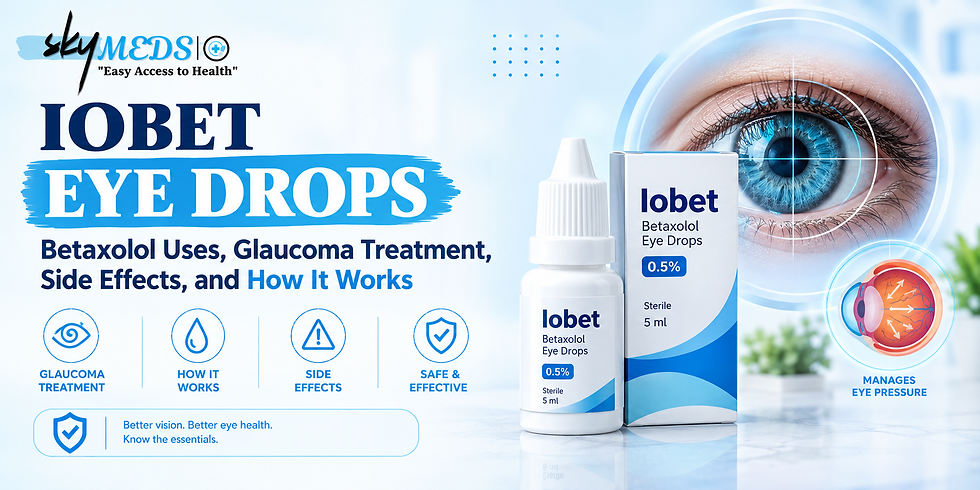
Iobet Eye Drops are prescription eye drops containing betaxolol 0.5%, a beta-blocker used to lower pressure inside the eye. They are prescribed mainly for open-angle glaucoma and ocular hypertension, conditions in which elevated intraocular pressure can gradually damage the optic nerve and threaten vision. Betaxolol works by reducing the eye’s production of aqueous humour, the clear fluid that helps maintain normal eye pressure. Iobet Eye Drops do not cure glaucoma or restore vision that has already been lost, but controlling eye pressure can help reduce the risk of further damage. Although the medicine is applied to the eye, some betaxolol can enter the bloodstream, so heart and breathing conditions remain important safety considerations. This guide explains Iobet Eye Drops uses, how betaxolol works, expected side effects, precautions, and how to use glaucoma drops correctly.
What Are Iobet Eye Drops Used For?
Iobet Eye Drops contain betaxolol 0.5% and are used to reduce elevated pressure inside the eye. Current Indian product listings identify Iobet as an FDC Ltd prescription product for glaucoma and ocular hypertension.
The two main conditions are:
Open-angle glaucoma: a chronic eye disease in which damage to the optic nerve can gradually reduce vision. Elevated eye pressure is an important risk factor.
Ocular hypertension: eye pressure is higher than normal, but detectable glaucomatous optic-nerve damage may not yet be present.
The official betaxolol ophthalmic prescribing information confirms that ophthalmic betaxolol is indicated for lowering intraocular pressure in ocular hypertension and chronic open-angle glaucoma. It may be used alone or with other glaucoma medicines when clinically appropriate.
Why lowering eye pressure matters
The eye continuously produces and drains aqueous humour. When the balance between production and drainage results in excessive pressure, the optic nerve can be placed at greater risk.
Glaucoma is particularly important because substantial damage can develop without obvious early symptoms. Lowering intraocular pressure, or IOP, is therefore a central part of treatment even when your eyes feel completely normal.
Betaxolol controls pressure rather than eliminating the underlying tendency toward glaucoma. This is why glaucoma drops generally need to be continued as prescribed rather than stopped once the eye feels better.
How Does Betaxolol in Iobet Eye Drops Work?
Betaxolol is a relatively selective beta-1 adrenergic receptor blocker. When applied to the eye, it lowers intraocular pressure mainly by reducing production of aqueous humour.
Aqueous humour is produced primarily by structures in the front part of the eye. By reducing the amount being produced, betaxolol decreases the pressure inside the eye.
The DailyMed clinical pharmacology information for betaxolol reports that its ocular pressure-lowering mechanism appears to involve reduced aqueous production.
Is betaxolol different from timolol?
Betaxolol and timolol are both beta-blocker eye medicines, but they do not have identical receptor selectivity.
Betaxolol is relatively selective for beta-1 receptors, whereas timolol blocks both beta-1 and beta-2 receptors. This pharmacological difference can matter because beta-2 blockade can affect the airways.
However, beta-1 selectivity does not make ophthalmic betaxolol free of breathing or cardiovascular risk. Product labeling warns that topical beta-blockers can be absorbed systemically and advises particular caution in people with respiratory disease.
Iobet Eye Drops and betaxolol at a glance
Feature | What to know |
Active medicine | Betaxolol 0.5% |
Drug class | Relatively selective beta-1 adrenergic blocker |
Main uses | Open-angle glaucoma and ocular hypertension |
Main action | Reduces aqueous humour production |
Treatment goal | Lowers intraocular pressure to help protect the optic nerve |
Does it cure glaucoma? | No; it controls an important risk factor |
Immediate vision improvement expected? | Usually no; treatment is aimed at preventing further damage |
Prescription status in India | Prescription medicine |
Important cautions | Certain heart rhythm problems, heart failure and respiratory disease require medical review |
Glaucoma treatment can be working even when you cannot feel any difference. Betaxolol is prescribed primarily to lower eye pressure and help protect future vision, not to produce an immediate improvement that you can see or feel.
How Should Iobet Eye Drops Be Used?
Iobet should be used exactly according to the ophthalmologist’s prescription. Do not change the number of drops or frequency based on symptoms because glaucoma and ocular hypertension often produce few noticeable warning signs.
General betaxolol ophthalmic instructions commonly involve regular daily administration, but your own prescription and Iobet label should determine your schedule. MedlinePlus notes that ophthalmic betaxolol is commonly used twice daily and should not be stopped without discussing it with the prescriber.
How to put glaucoma drops in correctly
A simple technique can help the medicine reach the eye while reducing contamination:
Wash and dry your hands.
Tilt your head back and look upward.
Gently pull the lower eyelid down to create a small pocket.
Hold the bottle above the eye without letting its tip touch your eye, eyelid, fingers, or another surface.
Instill the prescribed drop into the lower-eyelid pocket.
Close your eye gently rather than repeatedly blinking.
Press gently at the inner corner of the eye near the nose for about 1–2 minutes.
Wipe away excess liquid without rubbing the eye.
Replace the cap without touching or cleaning the dropper tip.
Pressing the inner corner of the eye temporarily blocks the tear drainage pathway. This can reduce how much medicine drains into the nose and enters the rest of the body.
What if you use other eye drops?
Different ophthalmic medicines generally need to be separated rather than placed into the eye immediately one after another.
Follow the timing instructions supplied by your ophthalmologist or pharmacist. MedlinePlus specifically advises separating betaxolol from another topical eye medicine according to professional instructions.
Contact-lens users should also check the Iobet packaging and their clinician’s instructions because preservatives used in some eye drops can interact with soft lenses.
What Are the Side Effects of Iobet Eye Drops?
The most common problems with betaxolol eye drops involve temporary eye discomfort, irritation, or tearing. More serious cardiovascular or breathing effects are much less common but are important because beta-blocker eye drops can be absorbed into the bloodstream.
Common eye-related effects
Possible effects include:
temporary stinging or discomfort;
irritation;
watering or tearing;
dry-eye sensation;
itching;
blurred vision;
sensitivity to light; and
a feeling that something is in the eye.
Some people may also experience headache, dizziness, or sleep-related symptoms.
Brief mild stinging after applying an eye drop is different from severe or persistent eye pain. New substantial redness, swelling, marked visual deterioration, or persistent discomfort deserves medical advice.
Can an eye drop affect your heart or lungs?
Yes. Topical beta-blockers can enter the systemic circulation.
Reported systemic effects of ophthalmic betaxolol include slow heart rate, heart block, worsening heart failure, shortness of breath and bronchospasm. These effects are uncommon, but they explain why your ophthalmologist needs to know about cardiovascular and respiratory conditions.
Iobet Eye Drops side effects and when to act
Symptom | Possible significance | What to do |
Brief mild stinging | Local eye-drop irritation | Usually settles; mention it if persistent or troublesome |
Watery or irritated eyes | Local adverse effect | Discuss if persistent |
Temporary blurred vision | Can occur after eye drops | Wait for vision to clear before activities requiring clear sight |
Persistent eye pain or major redness | Requires assessment | Contact an eye-care professional |
Unusually slow heartbeat, faintness or marked dizziness | Possible systemic beta-blocker effect | Seek prompt medical advice |
New or worsening shortness of breath or wheezing | Possible respiratory reaction | Seek prompt medical assessment; severe breathing difficulty is an emergency |
Sudden major loss of vision | Eye emergency rather than an expected treatment effect | Seek urgent ophthalmic care |
Who Should Be Careful With Betaxolol Eye Drops?
People with certain heart or breathing conditions require particular caution with betaxolol. This remains important even though the medicine is administered into the eye rather than swallowed.
U.S. prescribing information lists sinus bradycardia, significant atrioventricular heart block, cardiogenic shock, and overt cardiac failure among contraindications to ophthalmic betaxolol. It also warns that topical beta-blockers may be absorbed systemically.
Tell your doctor about heart and lung conditions
Before using Iobet, make sure your clinician knows if you have or have had:
a slow heart rate;
heart block or another rhythm disorder;
heart failure;
coronary heart disease;
asthma or significant wheezing;
chronic lung disease; or
low blood pressure.
Betaxolol's beta-1 selectivity may produce less beta-2 blockade than a nonselective beta-blocker, but it does not remove the need for caution in people with respiratory disease.
Diabetes and thyroid disease also matter
Beta-blockers can sometimes make certain warning symptoms of low blood glucose or an overactive thyroid less obvious. People with diabetes or thyroid disease should therefore tell their prescriber before treatment. MedlinePlus specifically advises informing the clinician about diabetes, thyroid disease, and heart or lung disease.
Pregnancy, plans for pregnancy, and breastfeeding should also be discussed before using the medicine.
Drug interactions
Tell your clinician about all prescription medicines, OTC products, and other eye drops you use.
Particular attention may be needed if you already take an oral beta-blocker or medicines that affect heart rate or blood pressure. MedlinePlus specifically highlights other beta-blockers and medicines such as verapamil among treatments that should be disclosed.
How Does Betaxolol Fit Into Modern Glaucoma Treatment?
Betaxolol is one of several medicine classes capable of lowering intraocular pressure. The best glaucoma treatment depends on the type and severity of glaucoma, target eye pressure, other health conditions, treatment response, side effects, cost, and ability to use the device consistently.
Other pressure-lowering eye medicines may include prostaglandin analogues, alpha-adrenergic agonists, carbonic anhydrase inhibitors, rho-kinase inhibitors, other beta-blockers, and combination products.
Some patients also undergo laser treatment or glaucoma surgery.
This means Iobet should not be viewed as automatically “better” or “weaker” than another glaucoma drop. Ophthalmologists choose and adjust treatment according to the amount of pressure reduction needed and the individual patient’s risks.
Why regular eye-pressure checks are still necessary
Using your drops every day does not eliminate the need for glaucoma follow-up.
Your eye-care team may monitor:
intraocular pressure;
the appearance of the optic nerve;
visual-field testing;
retinal nerve-fiber measurements; and
whether the prescribed drops are producing sufficient pressure reduction.
Glaucoma can progress without pain or obvious day-to-day vision changes. Regular monitoring allows treatment to be intensified or changed when necessary.
When Should You Contact a Doctor While Using Iobet?
Contact your ophthalmologist if you develop persistent eye irritation, worsening vision, significant redness or pain, troublesome dizziness, or other new symptoms after beginning Iobet.
You should also contact the prescriber before stopping the drops because suddenly abandoning glaucoma treatment may allow eye pressure to rise without producing noticeable symptoms. The MedlinePlus betaxolol patient guidance emphasizes continuing ophthalmic betaxolol even when you feel well and discussing discontinuation with your doctor.
Seek urgent medical attention for severe breathing difficulty, fainting, a very slow or abnormal heartbeat accompanied by significant symptoms, facial or throat swelling, or another suspected severe reaction.
Sudden major vision loss, severe eye pain, a markedly red eye with visual disturbance, or new halos accompanied by severe headache, nausea, or vomiting also requires urgent eye assessment. These symptoms should not be assumed to be ordinary betaxolol side effects.
Conclusion
Iobet Eye Drops contain betaxolol 0.5%, a beta-blocker used to lower intraocular pressure in glaucoma and ocular hypertension. The medicine reduces aqueous humour production, helping control an important risk factor for progressive optic-nerve damage, but it does not cure glaucoma or restore vision already lost. Local irritation is possible, and systemic absorption means heart and breathing precautions still matter despite the medicine being an eye drop. Use Iobet exactly as prescribed, avoid stopping it simply because your eyes feel normal, and keep scheduled eye-pressure and glaucoma-monitoring appointments.
If you are unsure about your technique, medicines, or side effects, ask your ophthalmologist or pharmacist to review them with you.


Frequently Asked Questions
1. What is Iobet Eye Drops used for?
Iobet Eye Drops contain betaxolol 0.5% and are prescribed to lower elevated pressure inside the eye. They are mainly used for open-angle glaucoma and ocular hypertension. Lowering eye pressure helps reduce an important risk factor for progressive optic-nerve damage and vision loss.
2. How quickly does betaxolol lower eye pressure?
Ophthalmic betaxolol can begin lowering intraocular pressure after administration, but glaucoma treatment is intended for ongoing pressure control rather than immediate symptom relief. You may not feel the medicine working. Your ophthalmologist measures its effectiveness through eye-pressure and glaucoma follow-up tests.
3. Can I stop Iobet when my eye pressure becomes normal?
Do not stop Iobet simply because your pressure improves or your eyes feel normal. A normal reading may mean the treatment is successfully controlling your pressure. Stopping glaucoma medication without medical advice can allow intraocular pressure to rise again.
4. Can Iobet Eye Drops cause a slow heartbeat?
Yes, although systemic cardiovascular effects from ophthalmic betaxolol are uncommon. Some medicine can enter the bloodstream, and slow heart rate or heart block has been reported with topical beta-blockers. Tell your clinician about heart conditions and other heart-rate-lowering medicines before treatment.
5. Is betaxolol safe if I have asthma?
Betaxolol is relatively beta-1 selective, but that does not make it risk-free for people with asthma or other significant respiratory disease. Bronchospasm and breathing problems remain possible with ophthalmic beta-blockers. Your ophthalmologist should know your respiratory history before prescribing it.
6. Why should I press the corner of my eye after using Iobet?
Gently pressing the inner corner of the closed eye can reduce drainage of the medicine through the tear duct into the nose. This may decrease systemic absorption while keeping medication in contact with the eye. Ask your eye-care professional to demonstrate the technique if needed.


Comments