
Ivermectin for Scabies: How It Is Commonly Used and What to Know

Written by Dr. Adam Makis in TheSkyMeds Editorial Standards
Medically reviewed by Jonathan Reed, Medical Content Reviewer on Aug 16 2026
Ivermectin for Scabies is a topic that has gained attention among patients and healthcare professionals alike. Scabies affects millions of people worldwide and can spread quickly through close physical contact. Because of its highly contagious nature, prompt diagnosis and proper treatment are important for controlling outbreaks and relieving symptoms.
Scabies is caused by the Sarcoptes scabiei mite, which burrows into the outer layer of the skin. This infestation can trigger intense itching, skin rashes, and discomfort that often become worse at night. If left untreated, scabies may spread to family members, close contacts, and community settings.
Ivermectin is one of several treatment options used to manage scabies. Depending on the individual's situation, healthcare providers may recommend oral ivermectin, topical medications, or a combination of treatments to effectively eliminate the infestation.
What Is Scabies?
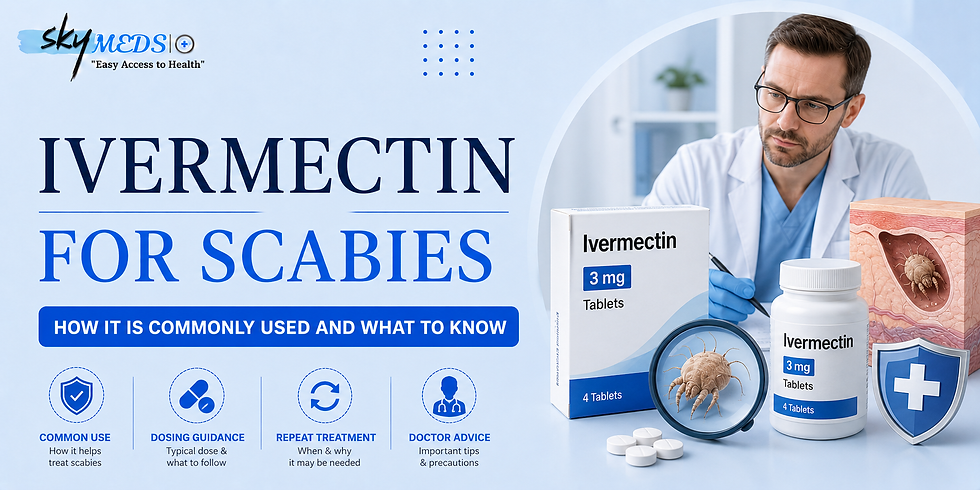
Scabies is a skin infestation caused by tiny mites known as Sarcoptes scabiei. These mites tunnel into the outer layer of the skin where they live, feed, and lay eggs.
The body's immune response to the mites and their waste products causes itching and skin irritation. Symptoms may take several weeks to appear in people who have never had scabies before.
Because scabies spreads easily through prolonged skin-to-skin contact, it can affect households, nursing homes, schools, and other community settings.
Common Symptoms of Scabies
The symptoms of scabies can vary depending on the severity of the infestation and whether a person has been infected previously.
Common symptoms include:
Intense itching
Skin rash
Small red bumps
Thin burrow tracks
Worsening itch at night
Skin irritation
Understanding Ivermectin
Ivermectin is an antiparasitic medication that has been used for decades to treat certain parasitic infections in humans. It works by affecting the nervous system of specific parasites, helping eliminate them from the body.
Although ivermectin is commonly known for treating several parasitic diseases, it may also be prescribed for scabies in certain situations. Healthcare providers determine whether ivermectin is appropriate based on individual patient factors.
The medication is available in oral form and should only be used according to medical guidance.
How Ivermectin Is Commonly Used for Scabies
Healthcare providers may prescribe ivermectin when treating certain cases of scabies. The exact treatment plan varies depending on the patient's age, health status, and the type of scabies involved.
Ivermectin is often considered when topical treatments are difficult to use or when widespread infestations occur. In some situations, oral treatment may improve treatment compliance and convenience.
Standard Scabies Treatment Approach
For many patients, ivermectin is used as part of a broader treatment strategy.
Treatment plans may involve:
Topical medications
Household management
Contact treatment
Follow-up evaluation
When Healthcare Providers May Consider Ivermectin
Certain situations may make oral treatment a practical option.
Examples include:
Large outbreaks
Multiple affected family members
Difficulty applying topical treatments
Institutional settings
How Does Ivermectin Work Against Scabies Mites?
Ivermectin works by interfering with nerve and muscle function in parasites. This action affects the mites responsible for scabies and helps eliminate the infestation.
The medication does not directly repair skin damage caused by scratching or inflammation. As a result, itching may continue for some time even after successful treatment.
Healthcare providers may recommend additional measures to help manage symptoms during recovery.
What Happens After Treatment?
Many patients wonder what to expect after taking ivermectin.
Possible outcomes include:
Gradual reduction in mite activity
Improvement in skin symptoms
Reduced itching over time
Healing of affected skin
Ongoing recovery monitoring
Comparison of Common Scabies Treatment Options
Several treatment options may be used for scabies. The choice depends on factors such as age, severity of infestation, and medical history.
Treatment Option | How It Is Used | Common Purpose |
Oral Ivermectin | Taken by mouth | Certain scabies cases |
Permethrin Cream | Applied to skin | Common first-line treatment |
Sulfur Ointment | Applied to skin | Alternative treatment option |
Benzyl Benzoate | Applied to skin | Used in some regions |
Symptom Relief Measures | Supportive care | Managing itching and irritation |
Benefits of Ivermectin in Certain Scabies Cases
Ivermectin offers several practical advantages in specific situations. Healthcare providers may consider these benefits when determining the most appropriate treatment plan.
The suitability of ivermectin varies from person to person and should always be evaluated by a healthcare professional.
Convenience of Oral Administration
Unlike topical treatments, ivermectin is taken by mouth.
Potential advantages include:
Easy administration
Improved compliance
Reduced application difficulties
Practicality during outbreaks
Simplified treatment process
Use in Community Outbreaks
Managing outbreaks often requires coordinated treatment efforts.
Potential benefits may include:
Broader treatment coverage
Easier group management
Reduced transmission risk
Improved outbreak control
Streamlined public health response
Important Considerations During Treatment
Successful treatment involves more than simply taking medication. Environmental measures and household management are often recommended to reduce the risk of reinfestation.
Patients should carefully follow instructions provided by their healthcare provider.
Managing Household Exposure
Scabies can spread through close contact and shared items.
Recommended measures may include:
Washing clothing
Cleaning bedding
Treating close contacts
Maintaining hygiene practices
Following healthcare instructions
Addressing Persistent Itching
Itching may continue for several weeks after successful treatment because the immune system continues responding to residual irritation.
Patients should understand that continued itching does not always mean treatment failure.
Supportive measures may include:
Moisturizers
Skin care routines
Medical follow-up
Symptom monitoring
Professional guidance
Possible Side Effects of Ivermectin
Like many medications, ivermectin may cause side effects in some individuals. Most side effects are generally mild, but experiences can vary.
Patients should discuss potential risks and benefits with their healthcare provider before starting treatment.
Commonly Reported Side Effects
Some individuals may experience temporary side effects.
Examples include:
Dizziness
Nausea
Fatigue
Mild digestive discomfort
Who Should Consult a Healthcare Provider Before Using Ivermectin?
Not every individual is an appropriate candidate for ivermectin treatment. Certain medical conditions, medications, and personal health factors may influence treatment decisions.
Healthcare providers evaluate these considerations before recommending a treatment plan.
Situations Requiring Medical Guidance
Professional consultation is especially important for:
Pregnant individuals
Breastfeeding individuals
Young children
Older adults
Individuals with complex medical conditions
Preventing Scabies Reinfestation
Preventing reinfestation is an important part of successful scabies management. Even effective treatment may be less successful if environmental measures are not addressed.
A combination of personal hygiene practices and household cleaning strategies can help reduce the likelihood of recurrence.
Prevention Tips
Helpful preventive measures include:
Avoiding close contact with infected individuals
Washing linens and clothing
Vacuuming living areas
Following treatment schedules
Monitoring symptoms
When Should You See a Doctor?
Anyone experiencing persistent itching, unexplained skin rashes, or possible exposure to scabies should seek medical evaluation. Early diagnosis can help prevent further spread and improve treatment outcomes.
A healthcare provider can determine whether symptoms are caused by scabies or another skin condition requiring different management.
Prompt medical attention is particularly important during outbreaks or when symptoms affect multiple household members.
"Successful scabies treatment often requires both appropriate medication and environmental management. Treating the infestation while reducing opportunities for reinfestation is an important part of recovery."
Conclusion
Ivermectin is an antiparasitic medication that may be used as part of scabies treatment in certain situations. Healthcare providers may recommend it for specific patients, community outbreaks, or cases where topical treatments are difficult to use. Its role in scabies management continues to be important in various clinical settings.
While ivermectin can help address the infestation, successful treatment often involves additional measures such as cleaning clothing and bedding, monitoring symptoms, and treating close contacts when appropriate. Following medical instructions carefully can improve treatment outcomes and reduce the risk of reinfestation.
Individuals who suspect they may have scabies should consult a healthcare professional for accurate diagnosis and personalized treatment recommendations.


FAQs
Q1. What is ivermectin used for in scabies treatment?
Ivermectin is an oral antiparasitic medication that may be prescribed to help eliminate the mites responsible for scabies.
Q2. Is ivermectin the only treatment for scabies?
No. Other treatments, including topical medications such as permethrin cream, may also be used.
Q3. Can itching continue after treatment?
Yes. Itching may persist for several weeks even after the mites have been eliminated.
Q4. Do family members need treatment too?
In some situations, healthcare providers may recommend treatment for close contacts to reduce transmission risk.
Q5. How does ivermectin work against scabies?
It affects the nervous system of the mites, helping eliminate the infestation.
Q6. Should I use ivermectin without medical advice?
No. Ivermectin should only be used under the guidance of a qualified healthcare professional.


Comments