
Trenaxa Injection: Tranexamic Acid Uses and Safety

Written by Elizabeth Chernoby in TheSkyMeds Editorial Standards
Medically reviewed by Jonathan Reed, Medical Content Reviewer Sepy 15 2026
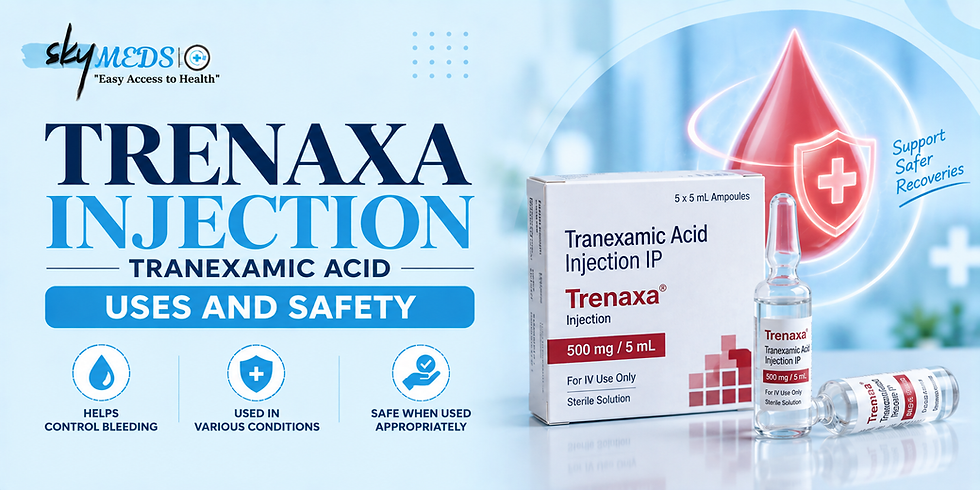
Trenaxa Injection contains tranexamic acid, a medicine used in clinical settings to help control certain types of excessive bleeding. Tranexamic acid does not create new blood clots; instead, it slows the breakdown of clots that have already formed, helping the body maintain clot stability while bleeding is controlled. This makes injectable tranexamic acid useful in selected situations involving significant blood loss, although the exact approved indications can differ between countries and individual products.
Trenaxa Injection should therefore be used according to its locally approved prescribing information and under medical supervision. Its benefits also need to be considered alongside important precautions involving blood clots, kidney function, seizures, interactions, and the route of administration. This guide explains how tranexamic acid works, where injectable treatment may be used, and the safety information patients and caregivers should understand.
What Is Trenaxa Injection and How Does Tranexamic Acid Work?
Trenaxa Injection is a brand of tranexamic acid, an antifibrinolytic medicine. “Antifibrinolytic” means that it reduces the process through which the body breaks down fibrin, an important structural component of a blood clot.
Normally, the body maintains a balance between forming clots to stop bleeding and later breaking those clots down. Tranexamic acid interferes with the activation and activity of plasmin, an enzyme involved in breaking down fibrin.
In practical terms, this helps an existing clot remain stable for longer. It can therefore reduce bleeding when excessive clot breakdown, known medically as fibrinolysis, contributes to blood loss.
This distinction is important: tranexamic acid is not a replacement for blood, and it does not correct every possible cause of bleeding. Severe bleeding may still require treatment of the underlying injury or condition, intravenous fluids, blood products, surgery, or other emergency measures.
Tranexamic acid helps protect formed blood clots from being broken down too quickly. It does not mean that every person who is bleeding should receive the medicine—the cause, severity, timing, medical history, and clinical setting all influence whether injectable treatment is appropriate.
What Is Trenaxa Injection Used For?
Trenaxa Injection may be used to reduce or control bleeding in selected clinical circumstances where tranexamic acid is considered appropriate. However, the approved indications for a specific tranexamic acid injection are jurisdiction- and product-specific, so the brand's local prescribing information should determine its authorised uses.
Evidence and clinical guidelines also support intravenous tranexamic acid in some major bleeding situations beyond the indications of particular product labels.
Major traumatic bleeding
Tranexamic acid has an established role in selected patients with major trauma and active or suspected active bleeding. Timing is particularly important.
The NICE major trauma recommendations advise giving intravenous tranexamic acid as soon as possible in patients with major trauma and active or suspected active bleeding. NICE advises against using it more than three hours after injury unless there is evidence of ongoing excessive fibrinolysis.
This is an example of why tranexamic acid injection is usually administered within a structured emergency-care protocol rather than used independently.
Postpartum haemorrhage
Postpartum haemorrhage means excessive bleeding after childbirth and is a potentially life-threatening emergency. Tranexamic acid can form part of its treatment.
The World Health Organization recommends early intravenous tranexamic acid as part of standard care for women with clinically diagnosed postpartum haemorrhage following vaginal birth or caesarean section.
The WHO recommendation on tranexamic acid for postpartum haemorrhage supports treatment within three hours of birth.
Current WHO guidance treats tranexamic acid as one component of a broader postpartum-haemorrhage response rather than as a stand-alone treatment.
Other bleeding situations
Tranexamic acid injection is also used in certain surgical and procedural settings, although specific approved indications and dosing vary between jurisdictions.
For example, the current US prescribing information for tranexamic acid injection specifically indicates it for short-term use in people with haemophilia to reduce or prevent haemorrhage and reduce the need for replacement therapy during and after tooth extraction.
This illustrates an important difference between a medicine's regulatory approval and broader evidence-based clinical use. A clinician may encounter tranexamic acid in different hospital protocols, but those uses should not automatically be assumed to be approved for every brand or country.
Examples of clinical situations in which intravenous tranexamic acid may be considered
Clinical situation | Why tranexamic acid may be used | Important context |
Major trauma with significant bleeding | Helps reduce excessive breakdown of formed clots | Early treatment is important; use follows trauma protocols |
Postpartum haemorrhage | Helps reduce ongoing blood loss after childbirth | Used with other emergency measures, not as stand-alone care |
Certain surgical bleeding situations | May help reduce perioperative blood loss | Use depends on procedure, patient risk and local protocol |
Haemophilia around certain procedures | May help prevent or reduce bleeding | Regulatory indications differ by country and product |
Other excessive bleeding associated with fibrinolysis | Helps stabilize formed clots | Requires assessment of the cause and suitability of treatment |
How Is Trenaxa Injection Given?
Injectable tranexamic acid is administered by healthcare professionals, generally through the intravenous route. The dose and administration schedule depend on why it is being used, the patient's body weight in some settings, kidney function, clinical circumstances, and the applicable product information or treatment protocol.
It should not be treated as a medicine for self-injection.
Administration speed can also matter. Current prescribing information for intravenous tranexamic acid warns that administering it too rapidly can cause hypotension, or a significant fall in blood pressure.
Why kidney function affects treatment
Tranexamic acid is eliminated largely through the kidneys. If kidney function is reduced, the medicine can accumulate in the body.
For this reason, intravenous doses may need to be reduced in people with renal impairment. Some product information also lists severe renal impairment as a contraindication because of the risk of accumulation.
There is no universal dose that patients should apply to themselves. The appropriate regimen depends on the indication, kidney function, product formulation, and clinical protocol.
What Are the Side Effects of Tranexamic Acid Injection?
Tranexamic acid can cause side effects, although not everyone receiving it will experience them. The significance of a particular reaction also depends on the dose, treatment setting, other medicines, and the patient's health.
Current prescribing information for intravenous tranexamic acid lists reported adverse reactions including nausea, vomiting, diarrhoea, dizziness or giddiness, low blood pressure, allergic skin reactions, and thromboembolic events.
More serious concerns include seizures, severe allergic reactions, blood-clot complications, and visual disturbances. These risks are among the reasons injectable tranexamic acid requires professional assessment and monitoring.
Can tranexamic acid increase the risk of blood clots?
Tranexamic acid reduces clot breakdown, so thromboembolic risk requires careful consideration. A thromboembolism occurs when a blood clot obstructs a blood vessel, potentially causing problems such as deep-vein thrombosis or pulmonary embolism.
Current US prescribing information contraindicates intravenous tranexamic acid in people with active intravascular clotting and warns that combining it with prothrombotic medicines can further increase thromboembolic risk.
This does not mean every patient receiving tranexamic acid will develop a clot. It means clinicians should consider clotting history, current conditions, other medicines, and the expected benefit of treatment.
What is the seizure risk?
Seizures have been reported with tranexamic acid. Current prescribing information notes that they have been particularly associated with settings involving higher doses, such as cardiovascular surgery, and with accidental administration into the neuraxial system.
Kidney impairment can also matter because reduced elimination may increase exposure to the medicine. Appropriate dosing and administration are therefore important safety measures.
Important safety considerations with tranexamic acid injection
Safety issue | Why it matters | What healthcare professionals consider |
Blood-clot risk | Tranexamic acid reduces clot breakdown | Current or previous clotting problems and other pro-clotting medicines |
Kidney impairment | The medicine may accumulate when kidney clearance is reduced | Kidney function and whether dose adjustment is necessary |
Seizures | Seizures have been reported, particularly in certain high-exposure settings | Dose, kidney function, neurological history and administration route |
Low blood pressure | Rapid intravenous administration can cause hypotension | Correct administration rate |
Severe allergy | Anaphylactic reactions have been reported | Previous hypersensitivity and immediate management if a reaction occurs |
Visual changes | Ocular adverse effects have been reported | New visual symptoms and the need for assessment |
Who May Need Extra Caution With Trenaxa Injection?
Extra caution is appropriate when a person has medical conditions or takes medicines that could alter the benefit-risk balance of tranexamic acid. The final decision should be made by the treating clinician using the specific product information and clinical circumstances.
Particular attention may be needed in people with:
impaired kidney function
active or previous blood-clotting disorders
a history or increased risk of seizures
previous hypersensitivity to tranexamic acid
certain neurological or vascular conditions
medicines or treatments that increase clotting risk
Pregnancy or breastfeeding should also be discussed with the treating healthcare professional. Importantly, using intravenous tranexamic acid to treat postpartum haemorrhage is a specific evidence-based emergency indication and should not be confused with routine unsupervised use during pregnancy.
Patients should tell their healthcare team about prescription medicines, non-prescription medicines, hormonal treatments, and relevant medical history before treatment whenever circumstances allow.
Why Is the Correct Injection Route So Important?
Tranexamic acid injection must be administered by the intended route specified for the product. Accidental administration into the spinal or epidural space can cause catastrophic neurological and cardiovascular toxicity.
This safety issue is important enough that current US tranexamic acid injection labels carry a boxed warning stating that the injection is for intravenous use only. Serious and fatal reactions, including seizures and cardiac arrhythmias, have occurred after accidental neuraxial administration.
The WHO alert on tranexamic acid injection medication errors describes reported cases in which tranexamic acid was accidentally mistaken for spinal anaesthetic medicines during caesarean deliveries. WHO warns that intrathecal administration is highly dangerous and can cause severe neurological toxicity.
This is primarily a medication-storage, identification, preparation, and administration safety issue for healthcare facilities and professionals. Patients should not attempt to administer injectable tranexamic acid themselves.
When Should Urgent Medical Help Be Sought?
Because tranexamic acid injection is normally given in a healthcare setting, serious reactions can often be recognised and managed by the treating team. Patients and caregivers should nevertheless know which symptoms require immediate attention, particularly after leaving a healthcare facility.
Urgent medical assessment is appropriate for symptoms that could indicate a serious allergic reaction or blood clot, such as:
sudden difficulty breathing or shortness of breath
chest pain
sudden swelling, pain, warmth, or redness in a limb
swelling of the face, lips, tongue, or throat
severe rash accompanied by breathing or swallowing difficulty
a seizure or loss of consciousness
sudden significant visual changes
sudden neurological symptoms such as marked weakness or difficulty speaking
Severe or continuing bleeding itself is also an emergency in many circumstances. Tranexamic acid should never delay investigation and treatment of the underlying source of major blood loss.
Conclusion
Trenaxa Injection contains tranexamic acid, an antifibrinolytic medicine that helps stabilize blood clots and can reduce bleeding in selected clinical situations. Intravenous tranexamic acid has important roles in areas such as major traumatic bleeding and postpartum haemorrhage, while approved indications for individual products vary between countries. Safe use depends on the reason for treatment, timing, kidney function, clotting and seizure risks, other medicines, dose, and correct administration route.
Trenaxa Injection is a prescription medicine intended for medically supervised use. Patients should not self-inject or determine their own dose. For product-specific advice, discuss its indication, benefits, risks, and alternatives with the treating doctor or pharmacist.


Frequently Asked Questions
1: What is Trenaxa Injection used for?
Trenaxa Injection contains tranexamic acid and is used to help control certain types of excessive bleeding. Injectable tranexamic acid is used in several clinical settings, including selected major bleeding situations. The exact approved uses of Trenaxa should be confirmed from its local prescribing information.
2: How does tranexamic acid stop bleeding?
Tranexamic acid reduces the breakdown of fibrin, an important part of blood clots. This helps formed clots remain stable for longer and can reduce ongoing blood loss. It does not treat every underlying cause of bleeding.
3: Is Trenaxa Injection a blood thinner?
No. Tranexamic acid is an antifibrinolytic medicine, not a blood thinner or anticoagulant. Instead of reducing clot formation, it helps prevent formed clots from breaking down too quickly, which is why clotting risks must still be considered before treatment.
4: Can tranexamic acid injection cause blood clots?
Thromboembolic events are a recognised safety concern with tranexamic acid, although risk varies between patients and treatment settings. Active intravascular clotting is a contraindication in current US prescribing information. Clinicians consider clotting history and other pro-clotting treatments before use.
5: Can people with kidney problems receive tranexamic acid?
Some people with kidney impairment can receive tranexamic acid, but dose adjustment may be necessary because the medicine is cleared through the kidneys. Accumulation can increase drug exposure and safety concerns. Kidney function should therefore be considered when intravenous treatment is prescribed.
6: Can I take or inject Trenaxa without a doctor's advice?
No. Injectable tranexamic acid should be administered under medical supervision using the correct dose and route for the clinical situation. Incorrect administration can have serious consequences, and the medicine may be unsuitable for people with certain clotting, kidney, neurological, or allergy-related risks.


Comments