
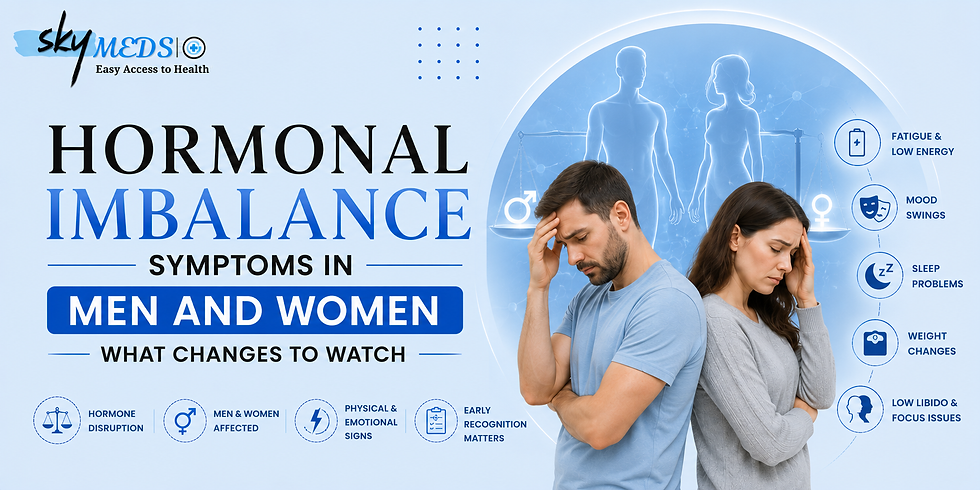
Hormonal Imbalance Symptoms in Men and Women: What Changes to Watch

Updated: Aug 21
Written by Elizabeth Chernoby in TheSkyMeds Editorial Standards
Medically reviewed by Jonathan Reed, Medical Content Reviewer Jul 30 2026
Introduction
A sudden change in your body does not always mean you are “just getting older” or having a stressful week. A new pattern of fatigue, unexplained weight change, irregular periods, reduced sex drive, mood changes, or sleep problems may sometimes be connected to hormones.
Hormones are chemical messengers that help regulate processes throughout the body, including metabolism, reproduction, mood, sexual function, growth, and energy use. Because they affect many systems at once, hormone-related problems can create symptoms that seem unrelated at first.
The challenge is that there is no single symptom called a hormonal imbalance. Different hormones can be too high, too low, or fluctuate for many reasons. Thyroid hormones, insulin cortisol, estrogen, progesterone, testosterone, prolactin, and other hormones can all influence how you feel and function.
Understanding the warning signs can help you recognize when a change deserves attention rather than simply trying to push through it.
Key Takeaways
Hormonal imbalance symptoms can affect energy, mood, weight, sleep, skin, sexual health, and fertility.
Men and women may experience some similar symptoms, but reproductive hormone changes can look different.
Irregular periods, hot flashes, acne, excess facial hair, low libido, erectile problems, and unexplained body composition changes may sometimes be hormone-related.
Symptoms alone cannot identify the exact hormone involved.
Blood tests and other evaluations may be needed to understand the cause.
Persistent, worsening, or disruptive symptoms deserve professional evaluation.
What Does “Hormonal Imbalance” Actually Mean?
Hormones are produced by glands and tissues throughout the body. Major endocrine organs include the thyroid, pituitary gland, adrenal glands, pancreas, ovaries, and testes.
These hormones act as chemical signals. They help coordinate processes such as:
Metabolism and energy use
Blood sugar regulation
Reproduction and fertility
Sexual function
Growth and development
Mood and stress responses
Sleep and body temperature
Bone health
A hormone problem may occur when the body produces too much or too little of a hormone, when hormone levels fluctuate significantly, or when the body does not respond to a hormone properly.
Importantly, symptoms are not proof of a hormonal disorder. For example, tiredness may be related to poor sleep, anemia, depression, infection, medication side effects, thyroid disease, or many other causes.
That is why the pattern, timing, severity, and duration of symptoms matter.
Common Hormonal Imbalance Symptoms in Both Men and Women
Some symptoms can occur in people of any sex because hormones influence systems shared by everyone.
Unexplained Changes in Weight
Unexpected weight gain or weight loss can sometimes be associated with hormone changes.
For example, thyroid disorders can influence metabolism. Insulin-related problems can affect how the body handles glucose and energy storage. Changes in sex hormones may also influence body composition.
However, weight change is rarely caused by one factor alone. Diet, activity, sleep, medications, stress, age, and underlying health conditions can all play a role.
A sudden or unexplained change is more important than a small fluctuation over time.
Persistent Fatigue
Everyone feels tired occasionally. Hormone-related fatigue is more concerning when it is persistent, unexplained, and accompanied by other changes.
Possible accompanying signs may include:
Feeling unusually sluggish
Difficulty concentrating
Reduced exercise tolerance
Sleep problems
Changes in mood
Unexplained weight changes
Thyroid conditions, adrenal disorders, blood sugar problems, reproductive hormone changes, and other health conditions may contribute to fatigue.
Mood and Emotional Changes
Hormonal changes can influence mood and emotional well-being. Some people notice:
Irritability
Anxiety
Low mood
Mood swings
Reduced motivation
Difficulty concentrating
Feeling emotionally different from usual
This does not mean every mood change is hormonal. Mental health, stress, sleep, medications, and life circumstances can also have a major impact.
The important clue is often a noticeable change from your usual baseline, particularly when mood symptoms appear alongside physical symptoms.
Changes in Sleep
Hormonal changes can affect sleep directly or indirectly.
A person may experience:
Difficulty falling asleep
Waking frequently
Night sweats
Excessive daytime sleepiness
A change in normal sleep patterns
For some women, changing estrogen levels during perimenopause and menopause are associated with sleep problems, hot flashes, mood changes, and memory difficulties.
In men, low testosterone may also be associated with sleep problems, although symptoms can have many other causes.
Changes in Sex Drive
A noticeable decline in libido can be connected to hormone changes, but it can also result from stress, relationship concerns, depression, anxiety, medication, poor sleep, or other health conditions.
Hormones that may influence sexual desire and function include testosterone, estrogen, and other reproductive hormones.
A sudden or persistent change should not automatically be dismissed as a normal part of aging.
Hormonal Imbalance Symptoms in Women
Hormonal changes in women may affect the menstrual cycle, fertility, reproductive organs, skin, mood, and body temperature.
Irregular or Changing Periods
Changes in menstrual patterns can be an important sign that something has changed in the reproductive hormone system.
You may notice:
Periods becoming irregular
Heavier or lighter bleeding
Longer or shorter cycles
Skipped periods
Periods stopping unexpectedly
Menstrual changes may occur during normal life stages such as puberty, pregnancy, postpartum recovery, perimenopause, and menopause. They can also be associated with conditions such as polycystic ovary syndrome, thyroid disorders, significant weight changes, and other medical problems.
During perimenopause, periods may become unpredictable as hormone levels fluctuate. Menopause is defined as 12 months without a menstrual period when the person is not using hormonal contraception.
Hot Flashes and Night Sweats
Sudden feelings of intense warmth, sweating, and night sweats are commonly associated with changing estrogen levels, particularly during perimenopause and menopause.
Some women also experience:
Sleep disruption
Mood changes
Vaginal dryness
Reduced sexual desire
Difficulty concentrating
These symptoms can vary greatly from one person to another.
Acne and Increased Facial or Body Hair
Changes in androgen levels may contribute to acne, increased facial hair, or other changes in hair growth.
Conditions involving excess androgen activity, including polycystic ovary syndrome, may be associated with acne and increased body or facial hair.
A rapid or pronounced change in hair growth deserves medical attention, particularly if it occurs with menstrual changes or other physical changes.
Fertility Changes
Hormonal signals help coordinate ovulation and reproductive function.
Difficulty becoming pregnant, irregular ovulation, or absent periods can sometimes be related to reproductive hormone changes. The cause may involve the ovaries, thyroid, pituitary gland, or other factors.
Fertility problems are complex, so hormone testing is only one part of a complete evaluation.
Vaginal Dryness and Pain During Sex
Lower estrogen levels can contribute to vaginal dryness and discomfort during sex, especially during and after menopause.
These symptoms are common, but they should not simply be accepted as something a person must endure. Treatment options may be available depending on the cause and a person's overall health.
Hormonal Imbalance Symptoms in Men
Men can also experience hormone-related changes involving testosterone, thyroid hormones, cortisol, insulin, and other endocrine systems.
Reduced Sex Drive
A persistent decline in sexual desire may be associated with low testosterone, but it is not specific to testosterone deficiency.
Stress, depression, sleep disorders, medications, relationship problems, and chronic illnesses can also affect libido.
A change becomes more important to investigate when it occurs alongside other symptoms such as erectile problems, reduced muscle strength, or changes in body composition.
Erectile Difficulties
Erectile dysfunction can have many causes, including vascular disease, diabetes, medication effects, psychological factors, and hormonal problems.
Low testosterone may be associated with erectile difficulties, but the two are not always caused by the same underlying problem.
A healthcare professional may consider symptoms, medical history, physical examination, and appropriate testing.
Loss of Muscle Strength or Increase in Body Fat
Low testosterone can be associated with reduced muscle size and strength, increased body fat, and bone loss.
These changes can also result from aging, inactivity, poor nutrition, illness, sleep problems, or certain medications.
The key is to look for a persistent pattern rather than assuming that one change confirms a hormone problem.
Fertility Problems
Testosterone and other reproductive hormones play important roles in sperm production and reproductive function.
Low testosterone may be associated with a low sperm count. However, male infertility can have many possible causes, including problems affecting the testes, sperm production, hormone signaling, or other reproductive structures.
Breast Enlargement or Tenderness
Breast enlargement or tenderness in men can sometimes be associated with changes in the balance between estrogen and testosterone.
It may also be linked to medications, weight changes, liver disease, or other conditions. New breast changes should be assessed rather than self-diagnosed.
“Hormonal symptoms are clues, not conclusions—the pattern needs to be understood before the cause can be treated.”
Hormone Changes That May Affect Everyone
Although reproductive hormones often receive the most attention, several other hormonal systems can affect both men and women.
Thyroid Hormone Changes
The thyroid helps regulate metabolism and many body functions.
Too little thyroid hormone may be associated with symptoms such as:
Fatigue
Feeling unusually cold
Constipation
Dry skin
Weight gain
Slowed thinking
Too much thyroid hormone may be associated with:
Unintentional weight loss
Feeling unusually warm
Rapid heartbeat
Trembling
Anxiety
Increased sweating
These symptoms overlap with many other conditions, so testing may be needed.
Insulin and Blood Sugar Regulation
Insulin helps the body manage glucose in the bloodstream.
Problems with insulin regulation may be associated with:
Increased thirst
Frequent urination
Fatigue
Changes in weight
Increased hunger
These symptoms can be important, especially when they are new or persistent.
Cortisol and Stress-Related Hormone Changes
Cortisol is involved in the body's stress response and affects glucose, protein, fat metabolism, inflammation, and other processes.
Long-term stress can also affect sleep, appetite, mood, and energy. This does not mean every stress-related symptom is caused by a cortisol disorder.
True disorders involving cortisol are medical conditions that require professional assessment.
What Changes Should You Watch Closely?
A symptom is more worth investigating when it is:
New — It represents a clear change from your normal health.
Persistent — It continues rather than resolving after a short period.
Progressive — It gradually becomes more noticeable or severe.
Multiple — Several symptoms appear together.
Disruptive — It affects work, relationships, sleep, exercise, or daily life.
A simple symptom journal can help you notice patterns.
Track:
When the symptom started
How often it occurs
Whether it is getting better or worse
Sleep quality
Menstrual timing, when relevant
Medication or supplement changes
Major changes in weight, diet, or exercise
Quick Comparison of Common Patterns
Pattern | Possible hormone-related clues | Other possible causes |
Persistent fatigue | Thyroid, reproductive, adrenal, or blood sugar changes | Poor sleep, anemia, infection, stress |
Weight change | Thyroid, insulin, or sex hormone changes | Diet, activity, medications, illness |
Low libido | Testosterone or estrogen changes | Stress, depression, medications, relationship factors |
Irregular periods | Estrogen, progesterone, thyroid, or reproductive hormone changes | Pregnancy, stress, weight change, other conditions |
Erectile problems | Testosterone or other endocrine factors | Vascular disease, diabetes, medications, anxiety |
Hot flashes | Estrogen changes | Medication effects, other medical conditions |
When Should You See a Healthcare Professional?
Consider arranging an evaluation if symptoms are persistent, worsening, or interfering with your daily life.
You should also seek medical attention for concerning changes such as:
Very heavy or unusual bleeding
Periods stopping unexpectedly
Significant unexplained weight loss
Rapid physical changes
Severe or persistent fatigue
New breast changes
Persistent erectile difficulties
Major changes in sexual function or fertility
Symptoms that affect your ability to function normally
Some symptoms may require more urgent assessment. Severe weakness, confusion, chest pain, severe shortness of breath, or other sudden serious symptoms should not be attributed to a hormone imbalance without medical evaluation.
How Are Hormonal Problems Evaluated?
There is no universal “hormone imbalance test.”
The evaluation depends on the symptoms and the hormones that may be involved.
A healthcare professional may consider:
Medical history
Family history
Current medications and supplements
Physical examination
Blood tests
Urine tests
Imaging in selected situations
Hormone levels can change naturally during the day and across different life stages. Some tests also need to be interpreted alongside other laboratory results.
For example, a single testosterone result may not provide the full picture, and a thyroid hormone result must be interpreted within the appropriate clinical context.
This is one reason online symptom checklists should be used as a starting point for questions—not as a replacement for diagnosis.
What Can You Do Before Your Appointment?
You do not need to diagnose yourself before seeing a healthcare professional.
Instead, prepare useful information.
Make a Symptom Timeline
Write down when the symptoms began and how they have changed.
Review Your Medications
Include prescription medications, over-the-counter products, supplements, and hormone-related products.
Note Major Life Changes
Recent illness, significant weight changes, major stress, pregnancy, childbirth, menopause transition, changes in exercise, or sleep disruption may all be relevant.
Ask Focused Questions
You might ask:
Could these symptoms have more than one possible cause?
Would testing be appropriate?
Could a medication be contributing?
What changes should I monitor?
When should I follow up?
This approach usually leads to a more useful conversation than asking for one specific hormone test based only on an online checklist.
The Bottom Line on Hormonal Imbalance Symptoms
Hormones influence almost every major system in the body, so hormone-related symptoms can appear in many forms.
For women, changes in menstrual cycles, hot flashes, vaginal dryness, acne, excess hair growth, and fertility may be important clues.
For men, reduced libido, erectile difficulties, changes in muscle strength, increased body fat, fertility concerns, and breast changes may warrant evaluation.
Both men and women may experience fatigue, sleep problems, mood changes, weight changes, and changes in sexual function.
The most important point is not to label every symptom as a hormone problem. Instead, pay attention to new patterns, multiple symptoms, and changes that persist. Understanding the pattern is the first step toward finding the right explanation and, when needed, the right treatment.

Frequently Asked Questions
1. What are the most common hormonal imbalance symptoms?
Common symptoms may include fatigue, unexplained weight changes, mood changes, sleep problems, reduced sex drive, menstrual changes, erectile difficulties, acne, and changes in body composition. These symptoms can have many causes, so they do not confirm a hormonal disorder.
2. Can hormonal imbalance cause weight gain?
Hormone-related conditions can contribute to weight changes, but weight gain is usually influenced by several factors. Thyroid disorders, insulin-related problems, medication effects, sleep problems, and changes in reproductive hormones may all be considered depending on the overall symptoms.
3. What are the signs of hormonal imbalance in women?
Possible signs include irregular periods, unusually heavy or light bleeding, hot flashes, night sweats, acne, increased facial hair, vaginal dryness, fertility difficulties, mood changes, and reduced libido. The cause may vary widely.
4. What are the signs of hormonal imbalance in men?
Possible signs include reduced sex drive, erectile difficulties, lower muscle strength, increased body fat, fertility problems, mood changes, sleep problems, and breast enlargement or tenderness. These symptoms can also have non-hormonal causes.
5. How do doctors test for hormonal imbalance?
Testing depends on the symptoms. A healthcare professional may use medical history, physical examination, blood tests, urine tests, and sometimes imaging. The correct tests depend on which hormone system may be involved.
6. When should I see a doctor about hormone symptoms?
Consider seeking medical advice when symptoms are persistent, worsening, unusual for you, or affecting daily life. New menstrual changes, significant unexplained weight changes, persistent sexual dysfunction, severe fatigue, or rapid physical changes are all reasonable reasons to seek evaluation.


Comments