
Why Is Acne Worse After Starting Aziderm?

Written by Dr. Zack Ferris in TheSkyMeds Editorial Standards
Medically reviewed by Jonathan Reed, Medical Content Reviewer Oct 23 2026
Acne worse after starting Aziderm can be confusing, especially when you expect a treatment to make your skin clearer. Aziderm contains azelaic acid, an ingredient used to treat acne, clogged pores, and inflammation. Some people experience redness, dryness, stinging, or more noticeable breakouts during the first few weeks. However, worsening acne does not always mean your skin is purging or that the medicine is working. Irritation, other skincare products, and existing acne can also explain the changes. This guide explains why breakouts may appear worse, how to recognise irritation, when improvement usually begins, and what precautions to follow.

What Is Aziderm and How Does It Work on Acne?
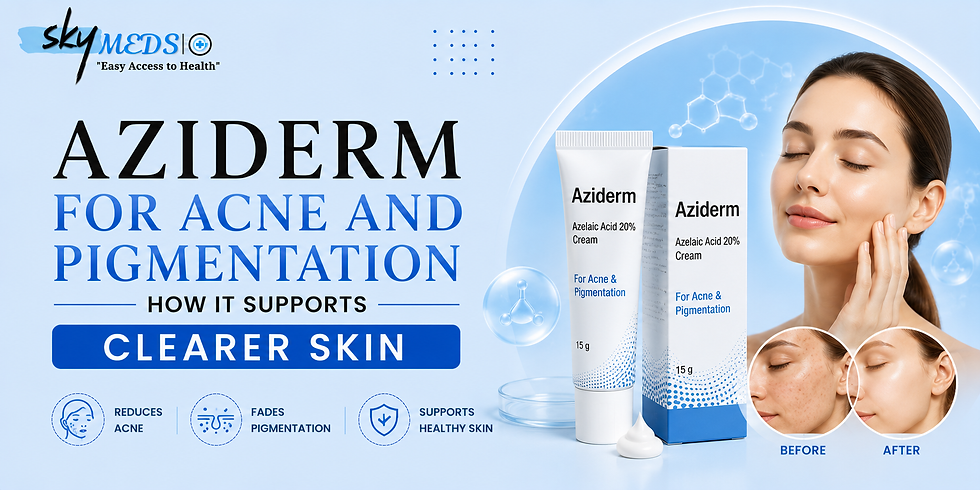
Aziderm is a topical medicine containing azelaic acid. It is available in different strengths and formulations, including 10%, 15%, and 20% products in India.
Azelaic acid helps reduce acne-related inflammation, affects bacteria associated with acne, and prevents excessive buildup of dead skin cells that can block pores.
It may also help improve post-inflammatory hyperpigmentation, the dark marks that remain after pimples heal.
The DermNet explanation of azelaic acid describes its anti-inflammatory effects, acne benefits, and possible skin irritation.
Does a Higher Strength Work Faster?
Not necessarily. Higher concentrations may cause greater irritation in some people, particularly those with sensitive skin.
The appropriate strength depends on your skin condition, formulation, and dermatologist's recommendation.
Using more product or increasing the concentration without advice does not guarantee faster improvement.
Why Can Acne Become Worse After Starting Aziderm?
Several factors may explain why your skin appears worse during the early stages of treatment. Some involve temporary discomfort, while others suggest that your skincare routine needs review.
1. Skin Irritation and Dryness
Azelaic acid can cause burning, stinging, itching, redness, and dryness, particularly when treatment begins.
Irritated skin may look inflamed and make existing pimples appear more noticeable.
If your skin feels unusually tight, painful, or sensitive, irritation may be a more likely explanation than acne purging.
2. Using Too Much Product
Applying a thick layer does not improve treatment effectiveness.
Excessive application may increase irritation, peeling, or discomfort.
Follow the instructions for your specific Aziderm formulation rather than applying additional cream whenever a new pimple appears.
3. Combining Several Active Ingredients
Using Aziderm alongside retinoids, benzoyl peroxide, salicylic acid, or exfoliating products may increase skin irritation.
These ingredients can be useful in acne treatment, but combining them requires an appropriate skincare plan.
Avoid introducing several new active products simultaneously without professional guidance.
4. Existing Acne Continues Developing
Acne develops beneath the skin before individual pimples become visible.
Some spots appearing shortly after starting Aziderm may already have been forming before treatment began.
Hormonal changes, oily cosmetics, and other triggers may also contribute to ongoing breakouts.
Is It Skin Purging or an Irritation Reaction?
Skin purging describes a temporary increase in visible breakouts that some people associate with products affecting clogged pores and skin-cell turnover.
Azelaic acid helps regulate abnormal skin-cell buildup, but predictable initial purging is not a well-established clinical effect.
Therefore, new pimples after starting Aziderm should not automatically be described as purging.
Differences between possible purging, irritation, and worsening acne.
Skin Change | Possible Explanation | What to Consider |
Small pimples in usual acne areas | Existing acne or possible temporary breakout | Monitor the overall pattern |
Burning, itching, and dryness | Skin irritation | Review application and skincare products |
Redness with peeling | Irritant skin reaction | Ask about reducing irritation |
New painful, deep pimples | Worsening inflammatory acne | Dermatologist assessment |
Severe swelling or blistering | Possible significant reaction | Stop treatment and seek medical advice |
How Can You Tell the Difference?
The location and appearance of skin changes provide useful clues, but they cannot reliably confirm purging.
Small breakouts in familiar acne-prone areas may reflect ongoing acne. Widespread burning, scaling, itching, or redness is more suggestive of irritation.
Persistent deterioration should be evaluated rather than treated as a normal adjustment period.
Worsening acne is not proof that Aziderm is working. Mild early irritation can occur, but severe burning, persistent inflammation, or increasing painful pimples should not be ignored or automatically labelled skin purging.
How Can You Reduce Irritation While Using Aziderm?
A gentle skincare routine can improve comfort and reduce unnecessary irritation during acne treatment.
The MedlinePlus azelaic acid medicine guidance recommends following prescribed directions carefully and avoiding excessive application.
Use a Gentle Skincare Routine
Wash your face with a mild, fragrance-free cleanser and pat the skin dry.
Apply Aziderm according to the instructions provided by your dermatologist or pharmacist.
A suitable non-comedogenic moisturiser, meaning one less likely to block pores, may help manage dryness.
Avoid harsh scrubs, aggressive exfoliation, and products that cause repeated stinging.
Practical dos and don'ts when starting Aziderm.
Do | Don't | Why It Matters |
Follow the prescribed application instructions | Apply extra product for faster results | Excess use increases irritation |
Use a gentle cleanser | Scrub inflamed skin | Reduces additional irritation |
Choose a suitable moisturiser | Ignore persistent dryness | Supports skin comfort |
Use broad-spectrum sunscreen | Leave dark marks unprotected | Sun exposure can worsen pigmentation |
Discuss other acne products with your clinician | Combine strong treatments without advice | Helps avoid overlapping irritation |
Review persistent breakouts | Assume every breakout is purging | Other causes may require treatment |
Should You Apply Aziderm Every Day?
The appropriate frequency depends on the formulation, your prescription, and how your skin responds.
Some patients may need a slower introduction or an adjusted schedule because of irritation.
Do not independently increase application frequency. If discomfort continues, ask your prescriber whether the treatment schedule should change.
How Long Does Aziderm Take to Improve Acne?
Aziderm does not clear acne overnight. Improvement generally develops gradually as inflammation and blocked pores respond to treatment.
The American Academy of Dermatology advice on acne treatment explains that improvement may become noticeable after four to six weeks, while fuller clearing can take two to three months or longer.
What Should You Expect During Treatment?
First few weeks: Mild stinging or dryness may occur, although not everyone experiences irritation. Existing breakouts may continue.
Around four to six weeks: Some people notice fewer new pimples and reduced inflammation.
After two to three months: More noticeable improvement may develop when the treatment is appropriate and consistently tolerated.
These are general acne-treatment timelines, not guaranteed Aziderm results.
If your acne becomes increasingly painful or continues worsening, seek medical advice without waiting for the full treatment period.
What If Your Acne Is Still Getting Worse?
Persistent acne may mean that Aziderm alone is not sufficient for your skin condition.
Acne severity, hormonal influences, other skincare products, and treatment adherence can affect results.
A dermatologist may reassess your diagnosis and consider different or additional treatment options, including a retinoid, benzoyl peroxide, or other medicines where appropriate.
Can Aziderm Help With Dark Acne Marks?
Azelaic acid may help reduce some dark marks caused by previous inflammation.
However, these marks often improve more slowly than active pimples.
Consistent sun protection is particularly important because sunlight can worsen pigmentation.
Treating new breakouts also helps prevent additional marks from developing.
What Side Effects Require Medical Attention?
Mild itching, dryness, stinging, and temporary redness are recognised effects of topical azelaic acid.
However, severe or persistent reactions should not be treated as normal.
The official azelaic acid cream prescribing information advises discontinuing treatment and obtaining medical advice when severe sensitivity or irritation develops.
Stop applying the product and seek prompt medical advice if you experience significant swelling, blistering, severe burning, or unusual skin-colour changes.
Seek emergency help for facial or throat swelling or difficulty breathing. Rare reports of worsening asthma have also occurred with azelaic acid products.
Consult your healthcare professional before using Aziderm during pregnancy or breastfeeding, and follow your locally supplied product instructions.
Conclusion
Acne worse after starting Aziderm may be related to early skin irritation, existing breakouts, excessive application, or combining several active skincare ingredients. Although azelaic acid can help control acne, worsening symptoms are not reliable evidence of skin purging. Improvement usually takes several weeks, and the response varies depending on acne severity and skin sensitivity.
For better results, use Aziderm as prescribed, maintain a gentle skincare routine, and avoid unnecessary exfoliation. If your acne becomes painful, irritation persists, or your skin continues deteriorating, consult a dermatologist. A professional review can help identify the cause and determine whether your treatment needs adjustment.

Frequently Asked Questions
1. Is it normal for acne to get worse after starting Aziderm?
Some people experience irritation or continued breakouts during early treatment. However, worsening acne is not automatically normal or proof of purging. Persistent or severe changes should be assessed by a dermatologist.
2. Does Aziderm cause skin purging?
Azelaic acid affects clogged pores and skin-cell buildup, but predictable purging is not a well-established side effect. New pimples may reflect existing acne or irritation. Do not assume every breakout means treatment is working.
3. How long does Aziderm take to clear acne?
Some improvement may appear after approximately four to six weeks, while more substantial clearing can take several months. Results depend on acne severity, formulation, and treatment consistency. Persistent worsening requires professional review.
4. Should I stop Aziderm if my skin is burning?
Mild temporary stinging can occur, especially early in treatment. However, severe or persistent burning requires stopping the product and seeking medical advice. Your dermatologist can assess whether treatment should be adjusted.
5. Can Aziderm 20% cause more irritation than Aziderm 10%?
A higher concentration may be less comfortable for some people, although reactions depend on the formulation and individual skin sensitivity. Do not change strengths without consulting your dermatologist.
6. Can I use moisturiser with Aziderm?
Yes. A gentle, non-comedogenic moisturiser may help reduce dryness and discomfort. Follow your prescribed application instructions and choose products suitable for acne-prone skin. Avoid moisturisers that repeatedly cause irritation.


Comments