
Bird Flu in 2026: Why Scientists Are Watching H5N1 More Closely Than Ever

Written by Dr. Adam Makis in TheSkyMeds Editorial Standards
Medically reviewed by Jonathan Reed, Medical Content Reviewer on Aug 22 2026
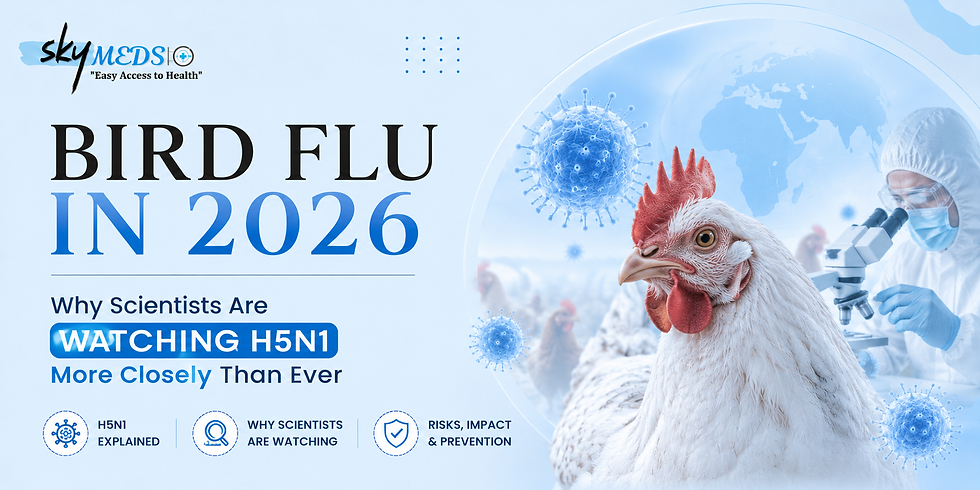
Bird Flu in 2026 is receiving close attention from health experts around the world. Scientists and governments are watching the H5N1 virus because it has been spreading among animals in recent years. This has increased concerns about the risks it may pose to both animal and human health.
Over the past few years, H5N1 has caused outbreaks in wild birds and poultry in many parts of the world. Scientists have also found the virus in different mammal species. This has increased concerns about how the virus spreads and has led to more research and monitoring efforts.
The current risk to the general public remains low, but experts are still keeping a close eye on H5N1. This helps scientists learn more about the virus and improve efforts to detect and respond to future outbreaks.
What Is H5N1 Bird Flu?
H5N1 is a subtype of influenza A virus that primarily infects birds. It belongs to a group of viruses known as avian influenza viruses and can cause severe disease in poultry and wild bird populations.
H5N1 was first identified in the 1990s and has caused outbreaks in many parts of the world since then.
Because flu viruses can change over time, scientists continue to monitor H5N1 closely and study any new developments.
Birds are still the main animals affected by H5N1. However, infections found in some mammals and a small number of human cases have increased scientific interest in the virus.
Why Is H5N1 Receiving More Attention in 2026?
Scientists are watching H5N1 more closely than before. The virus has spread to more places, infected different animals, and has also caused some human infections.
Public health experts are studying the virus closely to see if changes in the virus could affect how it spreads in the future.
At present, the virus does not spread easily from one person to another. However, scientists continue to monitor it closely because viruses can change over time.
Global Expansion of the Virus
Recent years have seen H5N1 spread across multiple continents.
Important developments include:
Widespread wild bird outbreaks
Poultry farm infections
Expansion into new regions
Increased wildlife surveillance
Continued international monitoring
Detection in New Areas
In June 2026, H5N1 was detected on mainland Australia for the first time. This showed that the virus has reached many parts of the world. Officials are closely watching wildlife and working to stop further spread.
How Does H5N1 Spread?
The H5N1 virus mostly spreads between birds through close contact and contaminated environments. Wild migratory birds can also carry the virus across large distances, contributing to its spread around the world.
Transmission patterns vary depending on the species involved and environmental conditions. Large outbreaks can occur when infected birds interact with domestic poultry populations.
Understanding transmission routes helps researchers develop prevention and containment strategies.
Common Transmission Routes
Potential routes include:
Bird-to-bird contact
Contaminated water sources
Exposure to infected droppings
Poultry farm transmission
Wildlife migration pathways
Human Infections and Public Health Concerns
Human H5N1 infections remain relatively rare compared to the number of animal outbreaks. Most reported cases have involved direct exposure to infected birds or contaminated environments.
Health officials carefully examine every human case of H5N1 because flu viruses can change over time. Studying these cases helps scientists spot any unusual changes or new risks.
Current evidence indicates that sustained human-to-human transmission has not been established.
How Human Infections Typically Occur
Reported infections have often involved:
Contact with sick poultry
Exposure to infected birds
Poultry farming activities
Animal handling
Contaminated environments
Why Scientists Are Concerned About Mammal Infections
One of the biggest reasons for increased monitoring is the virus's ability to infect mammal species. Researchers have documented infections in various mammals in different parts of the world.
Bird flu viruses mainly infect birds, but they can sometimes infect mammals as well. These cases help scientists learn how the virus behaves in different animals.
This does not mean a pandemic is imminent, but it does justify continued research and surveillance.
Mammals Affected in Recent Years
Researchers have reported infections in:
Dairy cattle
Foxes
Seals
Sea lions
Domestic cats
Other wildlife species
Symptoms of H5N1 Infection in Humans
Human infections can vary in severity. Some individuals may experience mild symptoms, while others may develop serious illness.
Bird flu symptoms can be similar to other illnesses. That is why lab tests are usually needed to confirm if someone has the virus.
Healthcare providers consider exposure history when evaluating possible cases.
Common Symptoms
Potential symptoms include:
Fever
Cough
Sore throat
Fatigue
Muscle aches
Breathing difficulties
Recent H5N1 Activity in 2025–2026
Bird flu cases and animal outbreaks are closely monitored around the world. The WHO and other health organizations track infections and study where people may have been exposed to the virus.
Several human cases of bird flu were reported in different countries during 2025 and early 2026. Most of these infections were linked to contact with infected birds or poultry. So far, health experts have not found evidence of ongoing spread between people.
What Surveillance Data Shows
Recent monitoring indicates:
Continued poultry outbreaks
Ongoing wildlife infections
Sporadic human cases
Strong international surveillance efforts
Continued low public risk assessments in many regions
Why Pandemic Experts Pay Attention to H5N1
Some flu viruses have caused global outbreaks in the past when they started spreading easily between people. Because most people are not well protected against H5N1, scientists keep a close eye on the virus.
This surveillance does not mean a pandemic will occur. Rather, it reflects a precautionary approach designed to identify potential threats early.
Planning ahead helps health officials deal with future risks more effectively.
Factors Scientists Monitor
Researchers watch for:
Genetic mutations
Changes in transmission patterns
New host species
Geographic expansion
Human infection trends
H5N1 Risk Factors and Exposure Sources
ertain activities may increase exposure risk during outbreaks.
People who work closely with animals often receive additional guidance regarding protective measures.
Risk Factor | Potential Exposure Source |
Poultry farming | Infected poultry |
Animal handling | Sick birds or animals |
Wildlife rehabilitation | Infected wildlife |
Veterinary work | Animal exposure |
Outbreak response activities | Contaminated environments |
Live bird market exposure | Infected birds |
How Scientists Track Bird Flu
To track diseases, experts test samples in labs, watch wildlife, and investigate reported cases. This helps them find problems quickly.
International collaboration is a key part of tracking emerging infectious diseases. Researchers share data to better understand viral evolution and outbreak trends.
Early detection helps authorities respond more quickly and effectively.
Surveillance Methods
Monitoring efforts include:
Wildlife testing
Poultry surveillance
Human case investigations
Genetic sequencing
International data sharing
Can H5N1 Be Prevented?
Preventing bird flu outbreaks requires people and organizations to work together. Health officials, farmers, wildlife experts, and local communities all play an important role.
It may not be possible to stop every bird flu outbreak, but taking safety measures can help reduce the spread and protect people and animals.
Public awareness also plays an important role during outbreaks.
Prevention Strategies
Recommended measures may include:
Avoiding contact with sick birds
Practicing good hand hygiene
Following food safety guidelines
Using protective equipment when appropriate
Reporting unusual animal deaths
What Researchers Are Studying Right Now
Scientists continue investigating how H5N1 evolves, spreads, and affects different species. Research also focuses on diagnostics, vaccines, antiviral strategies, and outbreak preparedness.
These efforts help scientists learn more about the virus and improve the way countries respond to outbreaks.
Ongoing research helps scientists learn more about new diseases and find better ways to manage them.
Current Research Priorities
Areas of focus include:
Viral evolution
Animal transmission
Human infection patterns
Vaccine development
Pandemic preparedness
"Monitoring H5N1 is not about predicting a pandemic. It is about understanding how the virus is changing and making sure health systems are ready for any future risks."
Conclusion
H5N1 bird flu continues to be closely monitored in 2026. The virus is still spreading among birds, has been found in several mammal species, and has caused some human infections. Although the risk to most people remains low, scientists continue to study the virus to better understand how it changes and spreads.
H5N1 has spread to new places in recent years. Because of this, experts are keeping a close watch on the virus. Scientists and health professionals are working together to track changes and stay prepared.
Scientists will continue to study H5N1, but public awareness and safe animal handling are also important. Together, these efforts can help reduce the risk of future outbreaks.


FAQs
Q1. What is H5N1 bird flu?
H5N1 is a type of bird flu virus that mainly affects birds, but it can sometimes infect people and other animals.
Q2. Why are scientists closely monitoring H5N1 in 2026?
Scientists are studying the virus closely because it is spreading around the world and has been found in several animals and some people.
Q3. Can H5N1 spread between people?
Current evidence does not show sustained human-to-human transmission.
Q4. Are human infections common?
No. Most people do not get infected. Human cases are rare and are usually linked to exposure to infected animals.
Q5. What symptoms can H5N1 cause?
Symptoms may include fever, cough, fatigue, sore throat, and respiratory illness.
Q6. Should the general public be worried?
Health experts say the risk to most people is currently low. However, they continue to watch the virus closely.
Comments