
Oropouche Virus Explained: The Emerging Infection Gaining Global Attention

Written by Dr. Zack Ferris in TheSkyMeds Editorial Standards
Medically reviewed by Jonathan Reed, Medical Content Reviewer on Aug 18 2026
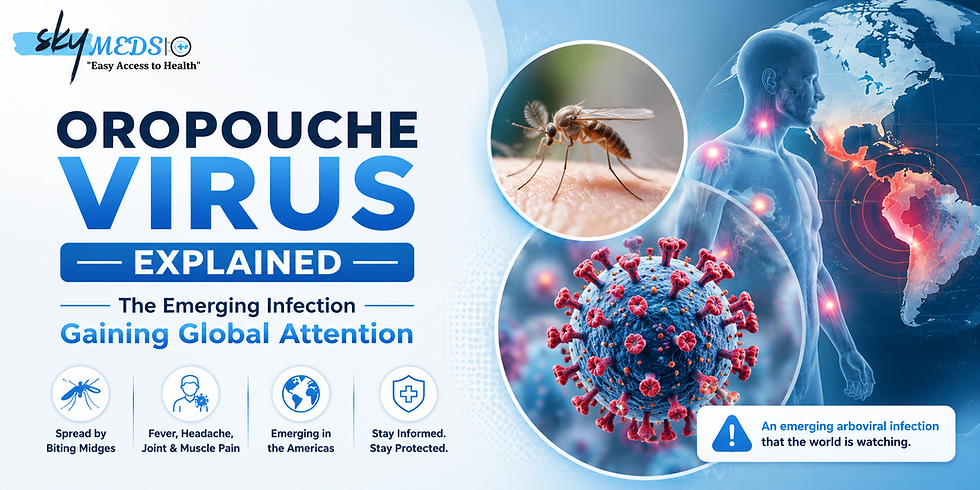
Oropouche virus is an emerging infectious disease that has attracted growing attention from researchers and public health organizations in recent years. While the virus has been known for decades, increased surveillance and recent outbreaks have highlighted its potential impact on public health.
Most reported cases have occurred in parts of South and Central America, where environmental conditions support the insects that can spread the virus. As international travel continues to increase, health authorities are paying closer attention to the possibility of infections being identified outside traditionally affected areas.
Although many people recover without serious complications, the virus remains an important topic of study. Understanding what is currently known about Oropouche virus can help explain why scientists are watching it more closely.
What Is Oropouche Virus?
Oropouche virus is a virus that belongs to a group known as orthobunyaviruses. It was first identified in the mid-20th century and has since been associated with outbreaks in several countries in Latin America.
The infection caused by the virus is commonly referred to as Oropouche fever. Symptoms often resemble those of other viral illnesses, which can make diagnosis challenging without laboratory testing.
Because the disease shares symptoms with other mosquito-borne and insect-borne infections, researchers continue working to improve detection and monitoring efforts.
Where Did Oropouche Virus Get Its Name?
The virus was named after the Oropouche region in the country of Trinidad and Tobago, where it was first identified. Since then, cases have been documented in multiple countries across South America and surrounding regions.
Over the decades, scientists have learned more about how the virus spreads and the environmental conditions that support outbreaks.
Today, Oropouche virus is considered an important emerging infectious disease in affected areas.
How Does Oropouche Virus Spread?
The virus is mainly transmitted through the bite of infected insects. Unlike some better-known diseases that are spread primarily by mosquitoes, Oropouche virus is often associated with tiny biting midges, although mosquitoes may also play a role in certain transmission cycles.
When an infected insect bites a person, the virus can enter the bloodstream and begin replicating within the body.
Public health experts focus heavily on insect control and bite prevention strategies because these remain the primary methods for reducing transmission.
Common Transmission Routes
The virus may spread through:
Bites from infected biting midges
Insect transmission cycles in affected regions
Exposure in outbreak areas
Environmental conditions that support insect populations
Why Is Oropouche Virus Receiving More Attention?
Recent outbreaks and improved disease surveillance have increased awareness of Oropouche virus. Public health agencies have reported growing numbers of cases in some regions, leading researchers to examine transmission patterns more closely.
International travel has also contributed to greater recognition of the disease. Travelers who become infected in affected regions may be diagnosed after returning home, helping health authorities identify emerging trends.
As a result, scientists continue monitoring the virus to better understand its potential public health impact.
Factors Driving Increased Attention
Researchers are focusing on:
Recent outbreaks
Expanded surveillance programs
International travel patterns
Emerging infectious disease risks
Public health preparedness
Common Symptoms of Oropouche Virus Infection
Many people infected with Oropouche virus develop symptoms that resemble other viral illnesses. Symptoms typically appear several days after exposure and may vary from person to person.
Because the symptoms overlap with diseases such as dengue and other tropical infections, laboratory testing is often necessary for confirmation.
Most individuals recover, although symptoms can sometimes be uncomfortable and disruptive.
Frequently Reported Symptoms
Common symptoms may include:
Fever
Headache
Muscle aches
Joint pain
Fatigue
Chills
Nausea
How Is Oropouche Virus Diagnosed?
Diagnosing Oropouche virus can be challenging because many of its symptoms are similar to those of other viral infections. Healthcare providers often consider travel history, exposure risk, and local outbreak activity when evaluating patients.
Laboratory testing is typically needed to confirm infection and distinguish it from other diseases with similar symptoms.
Accurate diagnosis helps support patient care and public health monitoring efforts.
Diagnostic Methods
Healthcare providers may use:
Medical history review
Symptom evaluation
Travel history assessment
Laboratory testing
Public health surveillance data
Who May Be at Higher Risk of Exposure?
People who live in or travel to areas experiencing outbreaks may have a greater chance of exposure. Risk often depends on environmental conditions, insect activity, and time spent outdoors.
Exposure risk may increase in locations where biting insects are common and preventive measures are limited.
Awareness of local public health recommendations can help individuals make informed decisions during travel.
Potential Risk Factors
Factors may include:
Travel to affected regions
Outdoor exposure
High insect activity
Limited insect protection
Residence in outbreak areas
Oropouche Virus at a Glance
The following table summarizes key facts about the virus.
Category | Information |
Virus Type | Orthobunyavirus |
Disease Name | Oropouche Fever |
Main Transmission | Infected biting insects |
Common Symptoms | Fever, headache, fatigue, muscle aches |
Geographic Presence | Primarily Latin America |
Diagnosis | Clinical evaluation and laboratory testing |
Prevention | Avoiding insect bites |
How Is Oropouche Virus Treated?
There is currently no specific antiviral treatment approved specifically for Oropouche virus infection. Medical care generally focuses on managing symptoms and supporting recovery.
Healthcare providers may recommend rest, hydration, and other supportive measures depending on individual circumstances.
People experiencing symptoms should seek professional medical advice, particularly if they have recently traveled to an affected region.
Supportive Care Approaches
Management may include:
Adequate rest
Hydration
Symptom monitoring
Medical evaluation
Follow-up care when needed
Preventing Oropouche Virus Infection
Prevention efforts focus largely on avoiding insect bites and reducing exposure to environments where infected insects may be present.
Public health authorities often recommend protective measures for residents and travelers in affected areas.
Simple precautions can help reduce the likelihood of insect-borne infections.
Prevention Tips
Helpful measures include:
Using insect repellents
Wearing protective clothing
Staying in screened or protected accommodations
Following local public health guidance
Reducing exposure during peak insect activity
Why Researchers Continue Monitoring Oropouche Virus
Scientists continue studying Oropouche virus because emerging infectious diseases can evolve and spread in ways that are not always predictable. Monitoring helps researchers track outbreaks, understand transmission patterns, and improve public health preparedness.
Increased surveillance also allows health authorities to identify trends more quickly and respond appropriately when outbreaks occur.
Ongoing research remains important for protecting communities and improving disease awareness.
Areas of Ongoing Research
Current research focuses on:
Transmission dynamics
Outbreak surveillance
Diagnostic improvements
Public health preparedness
Environmental risk factors
"Emerging infectious diseases such as Oropouche virus remind us of the importance of disease surveillance, travel awareness, and ongoing public health research."
Conclusion
Oropouche virus is an emerging infectious disease that has gained greater attention because of recent outbreaks, expanded surveillance, and increasing international travel. Although it is less well known than some other insect-borne diseases, it has affected thousands of people in regions where the virus circulates.
The infection is primarily spread through the bites of infected insects and often causes symptoms such as fever, headache, fatigue, and muscle aches. Because these symptoms can resemble other viral illnesses, laboratory testing is often needed for confirmation.
As researchers continue studying Oropouche virus, public health agencies remain focused on surveillance, prevention, and education. Staying informed about emerging infectious diseases can help individuals better understand potential health risks and the importance of preventive measures.


FAQs
Q1. What is Oropouche virus?
Oropouche virus is an orthobunyavirus that causes Oropouche fever, an infectious disease reported primarily in parts of Latin America.
Q2. How does Oropouche virus spread?
The virus is mainly spread through the bites of infected biting insects, particularly biting midges.
Q3. What are the common symptoms?
Common symptoms include fever, headache, fatigue, muscle aches, joint pain, and chills.
Q4. Is there a specific treatment for Oropouche virus?
There is currently no specific antiviral treatment approved specifically for Oropouche virus infection. Care is generally supportive.
Q5. Who is most likely to be exposed?
People living in or traveling to affected regions may face a higher risk of exposure.
Q6. How can I reduce my risk of infection?
Using insect repellents, wearing protective clothing, and following local public health guidance can help reduce exposure to insect bites.

Comments