
Why Measles Cases Are Rising Again Around the World

Updated: Aug 17
Written by Dr. Zack Ferris in TheSkyMeds Editorial Standards
Editorially reviewed by Jonathan Reed, Medical Content Reviewer Aug 17 2026
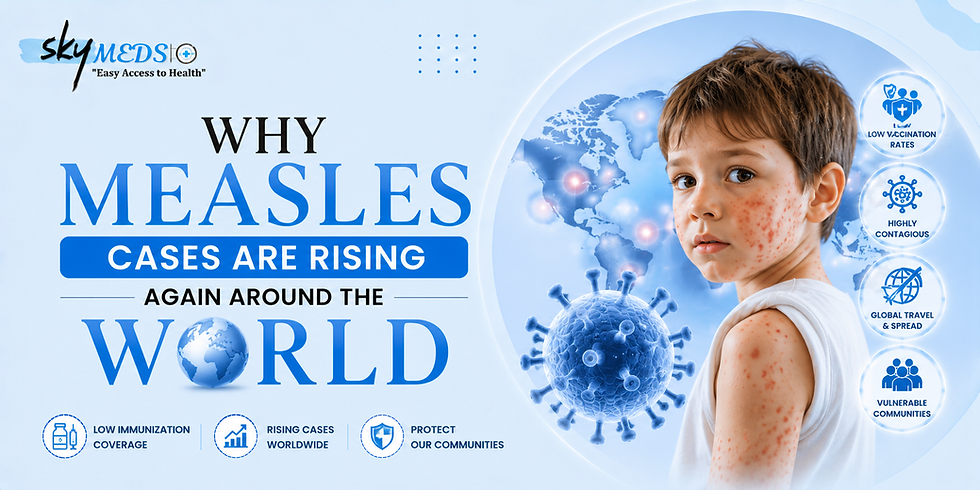
Why measles cases are rising again around the world has become an important public health question in recent years. Despite the availability of effective vaccines, measles outbreaks have been reported in various countries, affecting both children and adults.
Measles is a viral infection that spreads easily from person to person. It can become more common in areas where fewer people are vaccinated. While many people recover, some may develop serious health problems, especially young children.
Health organizations continue to track measles cases and encourage vaccination. Understanding why cases are increasing can help explain why measles remains a public health concern.
What Is Measles?
Measles is a viral infection caused by the measles virus. It spreads easily from person to person through the air when an infected person coughs, sneezes, or breathes.
The disease has been recognized for centuries and was once extremely common worldwide. Before widespread vaccination, measles infected millions of people each year.
Vaccines have greatly reduced measles cases in many countries. However, the virus can still spread in some areas and cause outbreaks among people who are not protected.
How Measles Spreads
Measles is known for its exceptional ability to spread from one person to another. The virus can remain in the air for a period of time after an infected person coughs, sneezes, or breathes.
Because measles spreads very easily, one infected person can pass the virus to many others who are not protected.
Because measles spreads so easily, health experts strongly encourage vaccination.
Common Ways Measles Spreads
Measles can spread through:
Coughing and sneezing
Airborne respiratory droplets
Close personal contact
Shared indoor environments
Exposure to infected individuals
Why Are Measles Cases Rising Again?
Several factors have contributed to the recent rise in measles cases. Outbreaks are more likely to happen when fewer people in a community are protected against the disease.
Health experts say there are several reasons for this issue, not just one. These reasons can include healthcare, social, and access-related challenges.
Understanding these contributing factors helps explain why measles remains a global health concern.
Declining Vaccination Rates
One common reason for the increase in measles cases is that fewer people are getting vaccinated in some communities.
When fewer people are vaccinated, more people are at risk of getting measles. This can make it easier for the virus to spread within a community.
Even a small drop in vaccination rates can increase the risk of measles outbreaks because the virus spreads very easily.
Why Vaccination Coverage Matters
High vaccination rates help:
Reduce disease transmission
Protect vulnerable populations
Prevent outbreaks
Support community immunity
Improve public health outcomes
Gaps in Community Immunity
Community immunity happens when enough people are protected against a disease, making it harder for the disease to spread.
When immunity levels decline, outbreaks become more likely. This can happen if vaccination rates decrease or if certain groups have limited access to healthcare services.
Strong community immunity helps protect individuals who may not be able to receive vaccines for medical reasons.
Factors That Can Create Immunity Gaps
Possible factors include:
Missed vaccinations
Limited healthcare access
Population movement
Healthcare disruptions
Delayed immunization schedules
Healthcare Disruptions and Missed Vaccinations
In some regions, disruptions to healthcare systems have affected routine childhood immunization programs. Missed appointments and delayed vaccinations can leave children unprotected against preventable diseases.
If large numbers of children miss their vaccines, the number of unprotected people in a community can grow.
Public health agencies have worked to address these gaps through catch-up vaccination efforts.
Effects of Missed Immunizations
Potential consequences include:
Increased outbreak risk
Larger susceptible populations
Reduced community protection
Greater disease transmission
Public health challenges
International Travel and Global Connectivity
People can travel between countries more easily than ever before. While travel has many benefits, it can also help infectious diseases spread from one place to another.
A person with measles may travel before realizing they are sick. This can allow the virus to spread to new areas.
This is one reason health authorities closely monitor measles activity around the world.
How Travel Influences Outbreaks
Travel can:
Introduce measles into new regions
Increase cross-border transmission
Connect outbreak areas
Spread infections more quickly
Challenge disease control efforts
Recognizing Measles Symptoms
Understanding the symptoms of measles can help support early identification and medical evaluation.
Symptoms usually appear after a person is exposed to the virus and may look similar to those of other common respiratory illnesses at first.
As the illness progresses, more characteristic symptoms often appear.
Common Measles Symptoms
Symptoms may include:
Fever
Cough
Runny nose
Red or watery eyes
Skin rash
Fatigue
Why Public Health Experts Remain Concerned
Vaccines have greatly reduced measles cases in many areas. However, outbreaks still occur and can place extra demands on healthcare services and public health efforts.
Measles can spread quickly, especially in communities where fewer people are vaccinated. Even areas that have controlled the disease in the past can experience outbreaks if fewer people are protected.
Maintaining prevention efforts remains an important public health priority.
Public Health Concerns
Experts focus on:
Outbreak prevention
Vaccination coverage
Community protection
Disease surveillance
Public awareness
Global Measles Challenges at a Glance
The following table summarizes some of the key factors associated with rising measles cases.
Factor | How It Contributes |
Lower Vaccination Rates | Increases the number of susceptible individuals |
Immunity Gaps | Allows easier disease spread |
Missed Immunizations | Reduces community protection |
International Travel | Helps spread infections across regions |
Healthcare Disruptions | Delays routine vaccination services |
Population Movement | Introduces infections into new communities |
What Can Communities Do?
Preventing measles outbreaks requires people and organizations working together. Healthcare providers, schools, families, and public health groups all play an important role.
Good health education and healthcare access help support protection against vaccine-preventable diseases.
Community engagement helps support informed health decisions and stronger disease prevention efforts.
Prevention Strategies
Helpful approaches include:
Staying up to date with recommended vaccinations
Supporting routine healthcare visits
Following public health guidance
Increasing community awareness
Encouraging preventive healthcare
Ongoing Measles Surveillance and Research
Researchers and public health agencies continue monitoring measles activity worldwide. Surveillance systems help identify outbreaks, track disease patterns, and guide public health responses.
Scientific research helps improve vaccination programs, disease prevention efforts, and responses to outbreaks.
Continued monitoring remains essential for protecting public health.
Areas of Ongoing Focus
Current efforts include:
Disease surveillance
Vaccination initiatives
Outbreak response planning
Public health education
Global health collaboration
"Measles remains one of the most contagious infectious diseases. Maintaining high vaccination coverage is one of the most effective ways to reduce outbreaks and protect communities."
Conclusion
Rising measles cases highlight the need for effective vaccination and public health programs. Measles outbreaks can occur when protection levels in a community decrease.
A combination of factors has led to more measles cases in recent years. These include lower vaccine coverage, missed vaccinations, and increased travel, all of which can help the virus spread.
When more people get vaccinated and have access to healthcare, measles outbreaks become less likely.


FAQs
Q1. What causes measles?
Measles is caused by the measles virus, a highly contagious virus that spreads through respiratory droplets and airborne particles.
Q2. Why are measles cases increasing again?
Several factors have contributed, including declining vaccination rates, immunity gaps, healthcare disruptions, and international travel.
Q3. Is measles highly contagious?
Yes. Measles is considered one of the most contagious infectious diseases known.
Q4. What are common measles symptoms?
Symptoms may include fever, cough, runny nose, red eyes, fatigue, and a characteristic skin rash.
Q5. Can measles outbreaks still occur in highly developed countries?
Yes. Outbreaks can occur anywhere if immunity levels decline and the virus is introduced into a susceptible population.
Q6. How can communities help prevent measles outbreaks?
Maintaining recommended vaccination coverage and supporting public health initiatives are key prevention strategies.
Comments