
Nipah Virus Explained: Symptoms, Transmission, and Risks

Updated: Aug 21
Written by Elizabeth Chernoby in TheSkyMeds Editorial Standards
Medically reviewed by Jonathan Reed, Medical Content Reviewer Aug 15 2026
Nipah Virus is a disease that can spread from animals to people. It was first discovered in 1998 during an outbreak in Malaysia. Since then, small outbreaks have happened in some Asian countries, including Bangladesh and India. Although Nipah Virus infections are not very common, health experts keep a close watch on them because the illness can be serious.
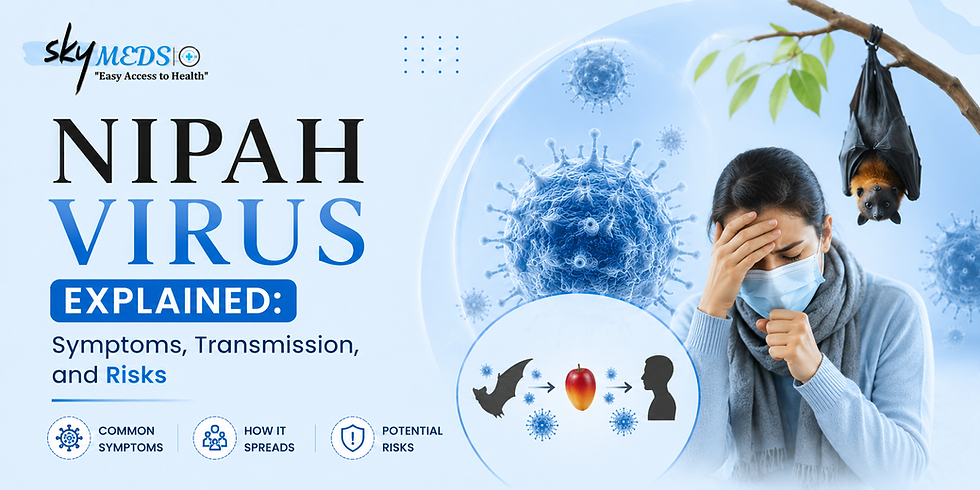
Fruit bats carry the Nipah Virus naturally. People can catch the virus from infected animals, contaminated food, or infected individuals. The disease can be serious and may affect the brain. That is why finding cases early and taking safety steps is very important.
Scientists are still studying the Nipah Virus to learn more about how it works, how to detect it quickly, and how to prevent and treat infections. At present, there is no specific approved medicine for Nipah Virus. However, supportive medical care helps doctors manage the illness and support recovery.
What Is Nipah Virus?
Nipah virus belongs to the Henipavirus genus and is considered an emerging infectious disease. The virus was first discovered following an outbreak among pig farmers in Malaysia.
Health organizations have been watching Nipah Virus closely since it was first found. The virus can make both animals and people sick, so it is an important public health concern.
Nipah Virus outbreaks do not happen very often. But when they do, health officials must act quickly to stop the virus from spreading and keep people safe.
History of Nipah Virus Outbreaks
The first Nipah Virus outbreak was reported in Malaysia and Singapore in the late 1990s. Since then, more outbreaks have occurred in countries such as Bangladesh and India.
Every outbreak teaches doctors and scientists something new about the virus. This helps them understand the disease better and respond more quickly when new cases appear.
Researchers continue to track Nipah Virus because it can still cause health problems and may lead to new outbreaks in the future.
Notable Outbreak Regions
Several regions have reported Nipah virus outbreaks.
These include:
Malaysia
Singapore
Bangladesh
India
Other parts of South and Southeast Asia
How Is Nipah Virus Transmitted?
Nipah virus can spread through multiple transmission routes. Understanding how infection occurs is one of the most important aspects of disease prevention.
Transmission may involve contact with infected animals, contaminated food products, or infected individuals. The specific route can vary depending on the outbreak.
Public health recommendations often focus on reducing exposure to known sources of infection.
Animal-to-Human Transmission
Animal exposure has played a role in several outbreaks.
Possible transmission routes include:
Contact with infected pigs
Exposure to bat-contaminated materials
Contact with infected animal secretions
Occupational exposure in animal settings
Handling infected animals
Foodborne Transmission
Certain outbreaks have been linked to contaminated food products.
Potential risks include:
Consumption of contaminated raw foods
Exposure to bat-contaminated fruit
Contact with contaminated food surfaces
Improper food handling practices
Unprotected food storage
Human-to-Human Transmission
In some outbreaks, person-to-person transmission has been documented.
Possible routes include:
Close physical contact
Exposure to respiratory secretions
Contact with bodily fluids
Caregiving activities
Healthcare-related exposure
Symptoms of Nipah Virus Infection
Symptoms can vary from person to person. Some individuals may experience relatively mild illness, while others develop severe complications.
The incubation period can range from several days to a few weeks. Early symptoms may resemble those of other viral infections, making diagnosis challenging.
In some people, symptoms can get worse very quickly. That is why it is important to see a doctor if Nipah Virus infection is suspected.
Early Symptoms
Initial symptoms may include:
Fever
Headache
Fatigue
Muscle aches
Sore throat
General discomfort
Severe Symptoms
In some individuals, more serious symptoms may develop.
Potential complications include:
Confusion
Disorientation
Neurological symptoms
Difficulty breathing
Seizures
Altered consciousness
How Nipah Virus Affects the Body
Nipah virus can affect multiple organ systems, but it is particularly known for its ability to impact the nervous system. In severe cases, inflammation of the brain may occur.
The severity of illness varies significantly among individuals. Some patients recover fully, while others may experience long-term complications.
Understanding the disease process helps researchers develop better approaches to treatment and prevention.
Potential Health Effects
Possible effects include:
Respiratory illness
Neurological complications
Inflammation
Cognitive impairment
Long-term health challenges
Who Is at Higher Risk?
Anyone can get infected if they come into contact with the virus. However, some people may be more likely to be exposed during an outbreak.
A person's risk may be higher based on their location, job, and contact with infected animals or people.
Awareness of risk factors supports targeted prevention efforts.
Higher-Risk Groups
Potentially higher-risk individuals include:
Healthcare workers
Caregivers
Animal handlers
Farmers
Laboratory personnel
Close contacts of infected patients
Nipah Virus Risk Factors and Exposure Sources
Various factors can increase the likelihood of exposure during an outbreak.
Risk Factor | Potential Exposure Source |
Contact with infected animals | Animal secretions and tissues |
Exposure to fruit bats | Contaminated materials |
Consuming contaminated foods | Foodborne transmission |
Caring for infected individuals | Human-to-human spread |
Healthcare exposure | Clinical settings |
Living in outbreak areas | Community transmission risk |
How Is Nipah Virus Diagnosed?
Doctors need laboratory tests to confirm Nipah Virus because its symptoms can be similar to those of other illnesses.
Healthcare providers evaluate symptoms, exposure history, and outbreak-related information when assessing possible cases.
Rapid identification supports timely public health interventions and patient care.
Diagnostic Methods
Healthcare professionals may use:
Laboratory testing
Molecular diagnostic techniques
Blood analysis
Exposure assessment
Clinical evaluation
Treatment Options for Nipah Virus
There is currently no specific approved medicine for Nipah Virus. Doctors mainly focus on treating symptoms and providing supportive care to help patients recover.
Doctors provide supportive care to help the body work properly and to treat symptoms as they appear.
Researchers continue investigating potential therapies and treatment approaches.
Supportive Care Measures
Supportive treatment may include:
Monitoring vital signs
Hydration management
Respiratory support
Symptom management
Intensive medical care when necessary
Prevention Strategies
You can help prevent infection by avoiding things that may spread the virus and by following health advice during outbreaks.
Preventive measures are particularly important in regions where outbreaks have occurred previously.
Community awareness and public health education play important roles in prevention efforts.
Practical Prevention Tips
Helpful preventive measures include:
Avoiding contact with sick animals
Practicing good hand hygiene
Following food safety practices
Using protective equipment when appropriate
Following public health guidance
Ongoing Research and Future Preparedness
Scientists are still studying Nipah Virus to learn more about how it spreads, how it affects the body, and how it can be treated. They are also working on vaccines and better ways to prepare for future outbreaks.
Health experts continue to monitor emerging diseases and share information with each other. Ongoing research can help develop better ways to prevent outbreaks and protect people in the future.
Public health preparedness remains a critical component of managing potential outbreaks.
Research Priorities
Current research areas include:
Vaccine development
Antiviral therapies
Improved diagnostics
Transmission studies
Outbreak prevention strategies
"Early diagnosis, fast response, and ongoing research can help reduce the impact of Nipah Virus outbreaks."
When Should You Seek Medical Attention?
Anyone who develops symptoms after possible exposure to Nipah Virus should see a doctor as soon as possible. Early medical care can help with treatment and prevent the disease from spreading.
Get checked by a doctor if you may have been exposed to the virus through travel, contact with an infected person, or contact with a sick animal.
Healthcare providers can determine whether additional testing or monitoring is necessary.
Conclusion
Nipah Virus is a rare but serious disease. It can spread through infected animals, contaminated food, or close contact with an infected person. Understanding how the virus spreads can help people take steps to stay safe and prevent infection.
Nipah Virus symptoms can vary from mild to severe. In some cases, it can cause serious problems with the brain and lungs. Getting medical attention early is important, and supportive care is currently the main way to manage the illness.
Research on Nipah Virus is ongoing, helping experts better understand the disease. At the same time, public health efforts and community awareness can help reduce the risk and impact of future outbreaks.


FAQs
Q1. What causes Nipah virus infection?
Nipah Virus infection happens when a person is exposed to the Nipah Virus. The virus is naturally carried by fruit bats.
Q2. Can Nipah virus spread between people?
Yes. Human-to-human transmission has been documented during some outbreaks.
Q3. What are the first symptoms of Nipah virus infection?
Early symptoms may include fever, headache, fatigue, muscle aches, and sore throat.
Q4. Is there a vaccine for Nipah virus?
Scientists are continuing to work on vaccines for Nipah Virus. However, the availability of these vaccines depends on future research and regulatory approval.
Q5. How can I reduce my risk of infection?
Good hygiene and safe food habits can help prevent infection. It is also important to avoid sick animals and follow the advice of health experts.
Comments